Propane, Oil, Heat Pumps, or Wood? Heating an Adirondack Home and What It Costs
Propane, Oil, Heat Pumps, or Wood? Heating an Adirondack Home and What It Costs
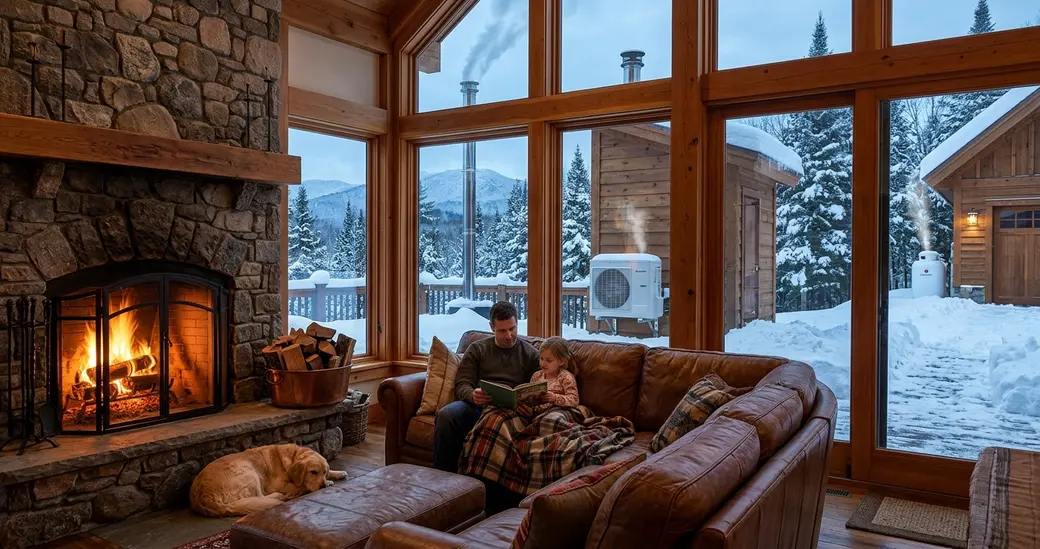
What is the best way to heat a home in the Adirondacks? There is no single winner. Propane and oil deliver reliable, powerful heat but track volatile fuel prices; cold-climate heat pumps are highly efficient and increasingly viable here, often paired with a backup; and wood is affordable and independent but labor-intensive. The right choice depends on your home's insulation, your budget, and how hands-on you want to be.
Heating is not a footnote in the Adirondacks, it is one of the largest ongoing costs of owning a home here, and it runs for a long season. Buyers who focus only on the purchase price and overlook how a house stays warm are in for a surprise their first January. That is why we treat heating as a core part of the true cost of ownership, the same way we do in why two Adirondack homes with the same price can cost you very different amounts to own.
This guide walks through the four main ways North Country homes stay warm, propane, heating oil, heat pumps, and wood, what drives the cost of each, and how to think about the right fit for your house. Consider these the home buying tips that keep a beautiful mountain home from becoming a winter money pit.
First, a Word on Fuel Prices (and Why We Won't Promise You a Number)
Before comparing systems, one honest caveat: energy prices move. They shift week to week and are almost always higher in the Northeast than the national average. So treat any figure as a snapshot, not a promise, and check current numbers before you budget.
For reference, in its October 19, 2026 update the U.S. Energy Information Administration put the national average residential price at roughly $2.69 per gallon for propane and about $6.19 per gallon for heating oil, numbers the EIA refreshes weekly through the heating season, and which tend to run higher here in the Northeast. The lesson is not the exact figure; it is that fuel-based heating costs are a moving target, and the EIA is the place to check the latest before you commit to a home or a system.
Propane: Reliable, Flexible, Price-Sensitive
Propane is one of the most common heating fuels in the region, and for good reason. It burns hot, works well for furnaces, boilers, fireplaces, cooktops, and on-demand hot water, and the equipment is widely serviced locally. For homes off the natural-gas grid, which is most of the Adirondacks, it is a dependable workhorse.
The trade-offs: you are exposed to propane price swings, you rely on scheduled deliveries and an on-site tank, and in a deep cold snap your usage climbs fast. Many owners manage this with budget-billing plans and pre-buy contracts to smooth out the volatility. Propane is a strong default when you want powerful, familiar heat and a wide pool of local service techs.
Heating Oil: Powerful Heat, Watch the Price
Oil-fired boilers and furnaces are a long-standing fixture in older Adirondack homes, and they produce strong, steady heat that many owners swear by in brutal cold. If you are buying an established home, there is a real chance it already runs on oil, which makes understanding the system part of your due diligence, exactly the kind of thing our guide to buying an older Adirondack home flags.
The considerations mirror propane: you are tied to fuel prices (and, as the EIA data shows, heating oil has recently carried a notably higher per-gallon price than propane), you need an on-site tank, and older oil equipment can be less efficient than modern alternatives. Have the tank, lines, and burner inspected closely before you buy, this is one of the systems a thorough winter inspection should scrutinize, as we cover in what most buyers don't realize about winter home inspections.
Heat Pumps: Efficient, Modern, and Increasingly Cold-Ready
Heat pumps have changed the conversation in cold climates. Instead of burning fuel, they move heat using electricity, which makes them remarkably efficient. According to the U.S. Department of Energy, today's heat pumps can cut the electricity used for heating by up to 75% compared with electric resistance heat, and modern cold-climate air-source models are designed to perform at temperatures as low as 5°F. The DOE recommends looking for the ENERGY STAR Cold Climate label in regions, like ours, where temperatures routinely drop below freezing.
There is also money on the table. Through NYSERDA's NYS Clean Heat program, New York State and energy companies offer rebates, financing, and tax credits for qualifying heat pump installations, which can meaningfully offset upfront cost. That matters, because the main trade-offs with heat pumps are the installation investment and the question of deep-cold performance: in a genuine Adirondack cold snap, many owners pair a cold-climate heat pump with a backup (propane, a wood stove, or electric resistance) so they are never caught short. For the right, well-insulated home, a heat pump can be the lowest-operating-cost option and it cools in summer too, a growing priority we touched on in why new construction isn't always the safe choice in the Adirondacks, where insulation and cold-climate performance make or break efficiency.
Wood and Pellets: Affordable, Independent, Hands-On
For many Adirondackers, wood heat is part of the lifestyle, not just the budget. A wood stove, pellet stove, or wood boiler can dramatically cut heating bills, especially if you have access to your own wood, and it delivers a kind of cozy, self-reliant warmth that fuel deliveries never will. It is also a genuine hedge: when a storm knocks out power and fuel deliveries stall, a wood stove keeps the house warm.
The trade-offs are real, though. Wood heat is labor: cutting, hauling, stacking, seasoning, loading, and ash removal. Pellets ease some of that but cost more and still require storage and handling. And safety is non-negotiable. Chimneys and flues need regular cleaning and inspection, since the National Fire Protection Association notes that December, January, and February are the peak months for home heating fires. A wood-burning appliance can also affect your homeowners insurance, which is one of the questions worth asking up front, see home insurance questions every Adirondack property owner should ask. Used well, wood is often the cheapest heat available; it simply asks for your time and your attention.
The Factor That Beats Them All: Your Home's Envelope
Here is the truth that reshapes every cost comparison: the most efficient heating system in a leaky, under-insulated house will still cost a fortune to run. Insulation, air sealing, window quality, and the condition of the heating equipment itself often matter more than which fuel you choose. A tight, well-insulated home is cheaper to heat with any system, and it is what makes a heat pump genuinely viable in cold country.
So when you evaluate a home, look past the brand on the furnace and ask about the envelope: How well is it insulated? When were the windows updated? How old and efficient is the current system? Those answers drive your real winter bills far more than the fuel type on the tank, which is exactly why heating belongs in your due diligence from the start, and why living through a few Adirondack winters teaches owners to respect it, as we describe in what it's really like living through Adirondack winters.
How to Choose: A Practical Framework
- Start with the house, not the fuel. Assess insulation, air sealing, and the age and efficiency of the existing system before anything else.
- Check current energy prices. Ground your budget in live EIA figures rather than last year's assumptions.
- Match the system to your life. Want low-maintenance reliability? Propane or oil. Lowest operating cost in a tight home, plus summer cooling? A cold-climate heat pump. Cheapest heat and don't mind the work? Wood.
- Plan for backup and resilience. Pair an efficient primary system with a backup for deep cold and power outages, a combination many local homes already use.
- Factor in incentives. Explore NYSERDA rebates and financing before assuming a heat pump is out of reach.
Work through those five steps and the right heating choice for your specific home, and your budget, gets a lot clearer.
Frequently Asked Questions
Do heat pumps actually work in the Adirondacks? Increasingly, yes, modern cold-climate air-source heat pumps are designed to perform in subfreezing temperatures, and the DOE recommends the ENERGY STAR Cold Climate label for regions like ours. Many local owners pair one with a backup heat source for the deepest cold snaps and power outages, giving them efficiency most of the year and peace of mind in extremes.
Is wood really cheaper than propane or oil? Often, especially if you can source your own wood, but the savings come with labor and upkeep: cutting, stacking, loading, and regular chimney cleaning for safety. Pellets reduce the labor but cost more. Wood is frequently the lowest-cost heat available in exchange for your time and attention.
What should I check about heating before buying an Adirondack home? Look at the whole picture: the age and efficiency of the furnace, boiler, or heat pump; the fuel type and current prices; the condition of any oil or propane tank; and, most importantly, the home's insulation and air sealing. A thorough winter inspection should document all of it before you commit.
Heat Smart, Spend Smart
There is no universally "best" way to heat an Adirondack home, only the best fit for your house, your budget, and how hands-on you want to be. Propane and oil offer familiar, powerful heat at the mercy of fuel prices; cold-climate heat pumps bring efficiency and incentives for the right, well-sealed home; and wood delivers affordable, independent warmth in exchange for labor. The smartest move is to start with the home's envelope, check current prices, and match the system to your life.
The team at Tina Leonard Real Estate helps buyers read a home's heating setup clearly, weigh the real winter costs, and avoid first-January surprises. Browse current listings or reach out for guidance on a specific property, and heat smart, spend smart, through every Adirondack winter.
Categories
Recent Posts




OUR MISSION
We're proud to be part of the following global networks of distinguished brokerage companies: