Why New Construction Isn't Always the Safe Choice in the Adirondacks
Why New Construction Isn't Always the Safe Choice in the Adirondacks
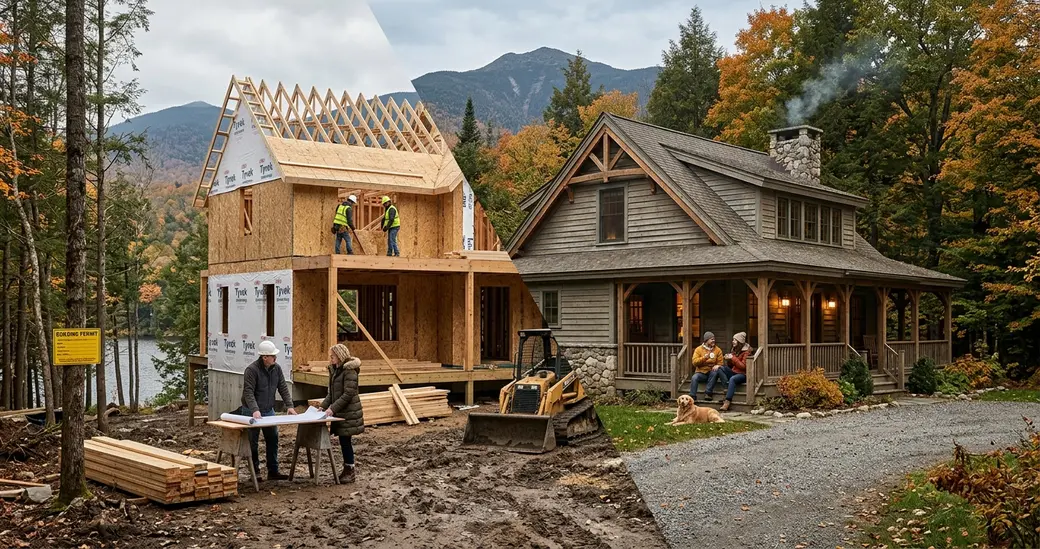
Is new construction the safest home-buying choice in the Adirondacks? Not always. Adirondack Park permitting, a short build season, and thin resale comps can make a new build riskier than a well-kept established home, so the "safe choice" label has to be earned, not assumed.
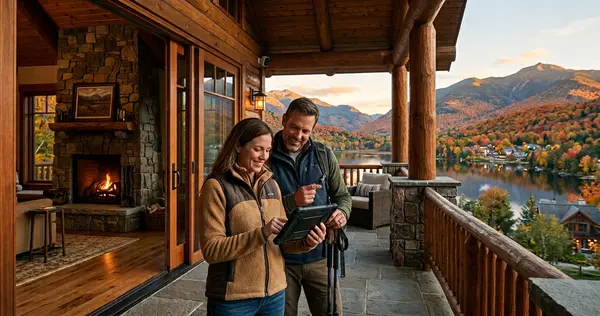
There is a comforting logic to buying new: no previous owner's shortcuts, no aging roof, no mystery behind the walls, just a clean slate with a warranty attached. For many buyers relocating to Lake Placid, Saranac Lake, or the wider Champlain Valley, new construction feels like the low-risk option by default.
In the Adirondacks, that assumption deserves a second look. This is not a suburban subdivision where builders pour foundations by the dozen and comparable sales are easy to find. It is a six-million-acre patchwork of protected land, short building seasons, and rural lots, a place where "brand new" comes with a distinct set of variables that do not show up in a glossy listing photo. These are the home buying tips experienced buyers and investors weigh before signing a build contract in Essex, Franklin, or Clinton County.
The Appeal Is Real, But So Are the Trade-Offs
New homes offer genuine advantages: modern insulation standards, efficient mechanicals, open layouts, and fewer immediate repairs. For a buyer who values predictability, those are real selling points, and Tina Leonard Real Estate regularly helps clients pursue new builds that fit their goals well.
The point is not to talk you out of new construction. It is to make sure the decision holds up against how property actually works inside the Adirondack Park, because the trade-offs here are specific, and they are easy to overlook until you are deep into a project.
1. Building in the Adirondack Park Comes With Rules Most Buyers Don't Expect
The single biggest difference between building here and building almost anywhere else is jurisdiction. Much of the region falls under the oversight of the Adirondack Park Agency, which regulates land use and development across both public and private land inside the Park's boundary.
What that means in practice:
- Shoreline setbacks and lot-size minimums can restrict where a home may sit, sometimes dramatically, on lakefront or stream-adjacent parcels.
- Wetlands and sensitive terrain may require additional review before a single tree comes down. The New York State Department of Environmental Conservation governs many of these environmental permits.
- Approval timelines for certain projects can stretch across months, especially for parcels near water or steep slopes.
A vacant lot advertised as "buildable" is not always buildable the way you are picturing. Before you fall for a view, confirm what the Park's rules actually allow on that specific parcel, the same homework we cover in buying land in the Adirondacks: read this before you make an offer and the 12 questions most land buyers forget to ask. This is exactly where local guidance earns its keep: a listing that looks like a bargain can carry constraints that reshape your entire plan.
2. The Building Season Is Short, and Delays Are Expensive
Adirondack winters are not a scheduling footnote. Frozen ground, heavy snow load, and limited access can compress the practical building season into roughly the warmer half of the year. When a delay pushes concrete or framing into November, it does not slide a week, it can slide until spring.
That matters for two reasons. First, carrying costs pile up: you may be paying for a rental, a construction loan, and a mortgage rate lock all at once while the site sits idle. Second, in a climate of elevated material and labor costs, a budget set in spring can look very different by the time work resumes. Checking national construction and pricing signals against regional reality, for example through the National Association of REALTORS® research hub, helps you sanity-check a builder's cost assumptions before you commit.
Established homes sidestep this entirely. What you see is what exists: no weather-dependent timeline, no open-ended budget, no second winter of waiting.
3. "New" Doesn't Always Mean "Built for This Climate"
A newly built home is only as good as the crew that built it and the standards they built to. In a climate with deep freezes, ice damming, and long heating seasons, construction quality is not cosmetic, it is the difference between a comfortable home and a money pit with a warranty.
Smart buyers look past finishes and ask about the parts they cannot see:
- Insulation values and air sealing appropriate for cold-climate performance, the ENERGY STAR program is a useful benchmark for what efficient, cold-ready construction should look like.
- Roof pitch and structure rated for genuine Adirondack snow load.
- Heating systems, well, and septic sized and sited correctly for a rural property.
A thoughtfully maintained older home in Wilmington or Keene has already proven it can survive decades of winters. A brand-new build has not been tested yet, and not every builder working in the region builds to the same standard, which is why our guide to buying an older Adirondack home is worth a read alongside this one.
4. Thin Comps Make New Construction Harder to Value
Here is a subtle risk that catches buyers and investors off guard. In a dense market, appraisers have dozens of recent, similar sales to lean on. Across much of the Adirondacks, comparable sales are scarce, parcels vary wildly in size, access, and water frontage, and new construction is relatively uncommon in many hamlets.
That scarcity cuts two ways. It can make a truly special property hard to price with confidence, and it can leave a new build vulnerable at appraisal if the finished cost outruns what nearby sales support. Understanding regional market trends, not just national headlines, is essential, and local patterns in Tupper Lake behave very differently from those in Lake Placid. Our Market Snapshot is a good place to start grounding expectations in real local numbers.
If you are weighing sound investment advice, remember that a premium paid for "new" does not automatically convert to resale value in a market where buyers often prize location, land, and lake access over build year.
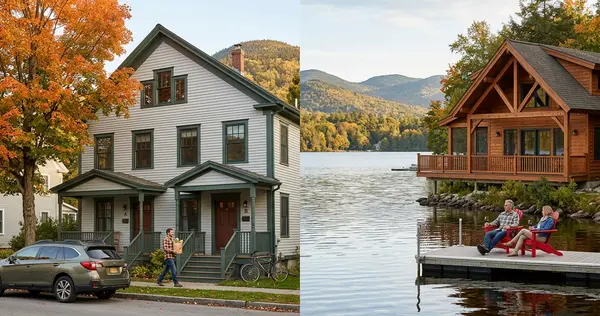
5. What Established Adirondack Homes Offer That New Builds Can't
Some of the most desirable qualities in this region simply cannot be built to order:
- Mature lots and legacy locations. The best waterfront and trail-adjacent parcels were often claimed generations ago, and many cannot be replicated under today's Park rules.
- Proven durability. A camp that has stood since mid-century has demonstrated something no spec sheet can promise.
- Character and community roots. For buyers drawn to the Adirondacks for its heritage, an established home in a settled hamlet delivers a sense of place that new construction takes years to earn.
For a feel of the regional lifestyle these homes plug into, Adirondack.net is a helpful window into communities across the Park.
For Investors: New Construction and the Rental Math
If your goal is rental income, run the numbers with local rules front of mind. Short-term rental regulations vary by community and are actively evolving. In the Village of Saranac Lake, for example, operating a short-term rental requires compliance with the village's permit requirements, review the details through the Village of Saranac Lake Community Development Department before you assume a property can be rented nightly.
Of note: Local ownership and a permit are required to have an STR in village limits.
Sound investment advice here starts with confirming what a property is legally allowed to do, then layering in the construction and appraisal considerations above. A new build that pencils out on paper can lose its edge quickly once permitting, a compressed build season, and thin resale comps enter the equation.
How to Decide: A Practical Framework
Use this quick checklist before committing to a new build in the Adirondacks:
- Confirm the parcel's buildability with Park and environmental rules in mind, not just the listing description.
- Get a realistic, season-aware timeline and budget in writing, with contingency for weather delays.
- Vet the builder's cold-climate track record, not just their portfolio photos.
- Pressure-test the appraisal risk against actual nearby sales, and study local market trends specific to your hamlet.
- Compare against established homes in the same price range before you decide.
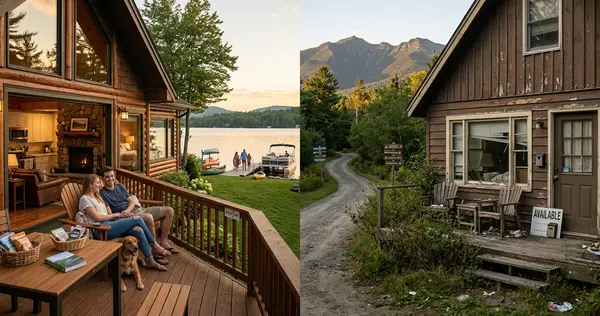
Work through those five steps and you will know whether new construction is the right call, or whether an existing home is quietly the safer, smarter buy.
Frequently Asked Questions
Is it cheaper to build or buy an existing home in the Adirondacks? It depends on the parcel and the year. Elevated material and labor costs, a short building season, and permitting requirements can push new construction well above the sticker price of a comparable established home. Always compare total build cost, including carrying costs and delays, against current listings.
Do I need special approval to build inside the Adirondack Park? Often, yes. Many projects fall under Adirondack Park Agency jurisdiction and may also require environmental review through the NYS DEC, particularly near shorelines, wetlands, or steep terrain. Confirm requirements for your specific parcel before purchasing land.
Does new construction hold its value better in the Adirondacks? Not necessarily. In a market with thin comparable sales, buyers frequently prioritize land, location, and lake access over build year, so a premium paid for new construction does not always translate to resale value. Local market trends matter more than the calendar year on the deed, a theme we explore in whether Adirondack real estate is still a good investment in 2026.
Ready to Weigh Your Options?
New construction can absolutely be the right move in the Adirondacks, but "new" and "safe" are not the same thing, and the difference is where local knowledge pays off. Whether you are comparing a build lot against an established home in Lake Placid, evaluating rental potential in Saranac Lake, or just starting to map out your options across the Champlain Valley, the team at Tina Leonard Real Estate can help you make the call with clear eyes.
Browse current listings to see what established and new homes are actually selling for, and reach out for personalized advice on a specific parcel or property. Make the safe choice the informed choice, and let the Adirondack experts at Tina Leonard Real Estate help you get there.
Categories
Recent Posts



OUR MISSION
We're proud to be part of the following global networks of distinguished brokerage companies: