
Buying an Older Adirondack Home? Here's What to Look For
Buying an Older Adirondack Home? Here's What to Look For
What should you inspect before buying an older Adirondack home? Before buying an older Adirondack home, look closely at the roof and snow load, the heating system, the well and septic, insulation, and hidden risks like radon, lead paint, and moisture damage, these factors drive both your costs and your long-term value in the Lake Placid and Saranac Lake area.
Why Older Adirondack Homes Are Worth the Extra Homework
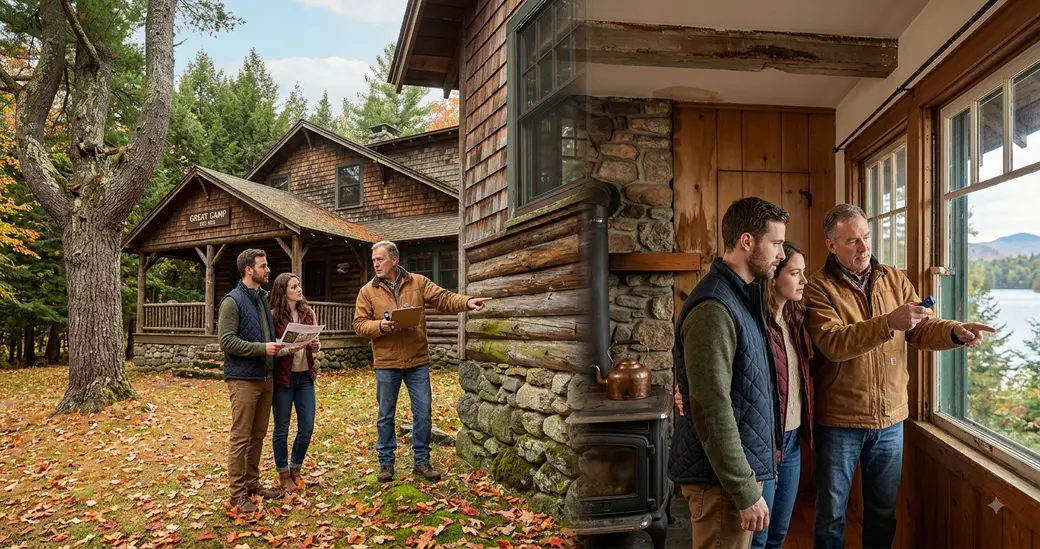
There is a particular kind of home in the Adirondacks that stops people in their tracks: a hand-hewn log camp on a quiet lake, a nineteenth-century farmhouse in the Champlain Valley, a cedar-shingled cottage tucked into the woods outside Keene Valley. These homes carry a character that new construction rarely matches. They also carry a century or more of decisions, some brilliant, some deferred, that a new buyer inherits the moment the deal closes.
That combination is exactly why older homes reward careful buyers and punish rushed ones. The good news is that most of what you need to evaluate is knowable before you write an offer. The best home buying tips for this region come down to one idea: understand what a mountain climate does to a building over time, and inspect accordingly.
This guide walks you through what to look for, how it affects your budget, and how condition ties back to the broader market trends shaping the Adirondack–Champlain Valley. Whether you are buying a year-round residence or weighing a property as a long-term hold, the goal is the same, clear eyes and no surprises.
Start With the Bones: Structure, Foundation, and Roof
Everything in an older home starts with the shell that keeps weather out, and in the Adirondacks weather is the whole story.
The roof and snow load
Snow is not a nuisance here; it is a structural design factor. A roof in Essex or Franklin County can hold several feet of wet snow for months. When you tour an older home, ask about the roof's age, the material, and whether the framing was ever reinforced. Steep metal roofs shed snow well and last for decades; older asphalt or low-slope roofs can sag, leak, and trap ice dams. Look for water stains on ceilings, daylight in the attic, and interior doors that stick, often the first sign of a frame that has moved.
The foundation
Many older camps sit on fieldstone, dry-laid piers, or shallow footings that predate modern frost-depth standards. Frost heave is the quiet enemy: it lifts and cracks foundations over decades. In the basement or crawlspace, look for stepped cracks in masonry, bowed walls, and standing water. A home built for summer use may never have been engineered to survive a full winter cycle at all.
Moisture and rot
Wood plus water plus time equals rot, and the Adirondacks supply plenty of water. Check sill plates where the frame meets the foundation, the base of exterior logs, window and door surrounds, and anywhere gutters dump water near the structure. Soft, spongy wood you can push a screwdriver into is a repair you want priced before closing.
Systems That Define Comfort and Cost
A beautiful old home with failing systems is a renovation project wearing a disguise. These are the systems that most affect what you will actually spend.
Heating and wood stoves
Wood heat is part of Adirondack life, but an aging wood stove or chimney is a safety and insurance issue. Ask whether the chimney has been lined and recently swept, and whether the stove meets current code and clearance requirements. If the home relies on an old oil furnace or a buried oil tank, factor in inspection, and potentially removal, of that tank. Buried tanks are a common and expensive surprise.
Insulation and energy performance
Countless older Adirondack homes were built as seasonal camps and only later converted to year-round use, often with insulation added piecemeal or not at all. Thin walls and single-pane windows translate directly into heating bills that can shock a first-winter owner. The U.S. Department of Energy's Energy Saver guide is a practical reference for understanding where an older home loses heat and what upgrades pay back fastest.
Well, septic, and water
Most rural properties around Saranac Lake, Wilmington, and Jay rely on a private well or spring and an on-site septic system rather than municipal utilities. Both are invisible until they fail, and both are expensive to replace. Ask for the septic's age, tank size, and last pump-out, and request a water test. The EPA's private well resources explain what to test for and how often, which is essential reading for anyone new to well ownership.
The Hidden Risks Worth Testing For
Some of the most important issues in an older home are the ones you cannot see on a walkthrough. Budget for the tests below, they are inexpensive relative to what they protect you from.
- Radon. The Adirondack region's granite geology makes radon a genuine and common concern. It is odorless, colorless, and a serious health risk, but easily tested and treatable with a mitigation system. Start with the EPA's radon guidance.
- Lead paint. Homes built before 1978 may contain lead-based paint, which matters especially if children will live there. The EPA's lead information center covers testing and safe renovation.
- Asbestos. Old pipe wrap, floor tiles, and siding can contain asbestos. It is generally safe if undisturbed but hazardous during renovation, so identify it before you start tearing things out.
- Electrical and plumbing vintage. Knob-and-tube wiring, fuse boxes, and galvanized or lead supply lines are all common in older housing stock and often need updating for safety and insurability.
A qualified inspector is your best ally here. The International Association of Certified Home Inspectors is a useful place to understand what a thorough inspection should cover so you can ask sharper questions.
Charm Versus Renovation Reality
Falling in love with an old home is easy. The discipline is separating the character you are buying from the work you are inheriting. Original woodwork, wide-plank floors, stone fireplaces, and lake frontage are genuine, lasting value. A leaking roof, a failing septic, and no insulation are line items on a budget.
A practical exercise: for every home you seriously consider, build two numbers. The first is the purchase price. The second is a realistic estimate of the work needed to make it safe, comfortable, and code-compliant for how you intend to use it. The homes that make the best long-term decisions, and the smartest investment advice anyone can give you, are the ones where those two numbers still make sense together against comparable sales in the area.
How Condition Connects to Market Trends and Value
Condition does not exist in a vacuum; it interacts with demand. Waterfront and view properties in the Adirondacks tend to hold value through market cycles because the land itself is scarce, while a deep-woods seasonal camp with major deferred maintenance is far more sensitive to buyer sentiment and financing conditions.
Financing is part of the picture too. Broader mortgage market trends set by rates influence how much competition a listing draws and how much room you have to negotiate repairs. Freddie Mac's Primary Mortgage Market Survey is a reliable weekly gauge of where rates sit, and the National Association of Realtors' research and statistics offer national context you can weigh against local conditions.
For a feel for the region itself, its towns, seasons, and rhythms, Adirondack.net is a good orientation to the communities you are considering, from Lake Placid to Tupper Lake. Sound investment advice always starts with knowing the market you are buying into, not just the house.
Frequently Asked Questions
Are older Adirondack camps hard to insure? They can be, especially with wood heat, older wiring, or a knob-and-tube system. Insurers often want documentation that the chimney, stove, and electrical panel meet current standards. Getting an insurance quote early, before you are under contract, is one of the most overlooked home buying tips for this region.
Should I buy a seasonal camp and convert it to year-round? It is common and often worthwhile, but conversion costs vary enormously depending on insulation, heating, plumbing, and whether the water and septic systems can handle full-time use. Price the conversion before you fall in love with the location.
Is an older Adirondack home a good investment? It can be, particularly for waterfront or view properties where land is scarce. The best investment advice is to weigh purchase price plus renovation cost against current market trends and comparable sales, rather than judging the price tag alone.
Ready to Look at Older Adirondack Homes With Confidence?
Buying an older home in the Adirondacks is one of the most rewarding purchases you can make, when you go in informed. Tina Leonard Real Estate knows this housing stock intimately, from lakefront camps around Saranac Lake to farmhouses in the Champlain Valley, and can help you separate the homes worth pursuing from the ones best left alone.
Browse current Adirondack listings, subscribe to the newsletter for local market trends and new-to-market properties, or reach out for personalized guidance on a specific home you are considering. For a candid, no-pressure conversation about your search, contact Tina Leonard Real Estate, LLC, 518-524-3273 or tinaleonardrealestate.com.
Categories
Recent Posts






"My job is to find and attract mastery-based agents to the office, protect the culture, and make sure everyone is happy! "