Why Two Adirondack Homes With the Same Price Can Cost You Very Different Amounts to Own
Why Two Adirondack Homes With the Same Price Can Cost You Very Different Amounts to Own
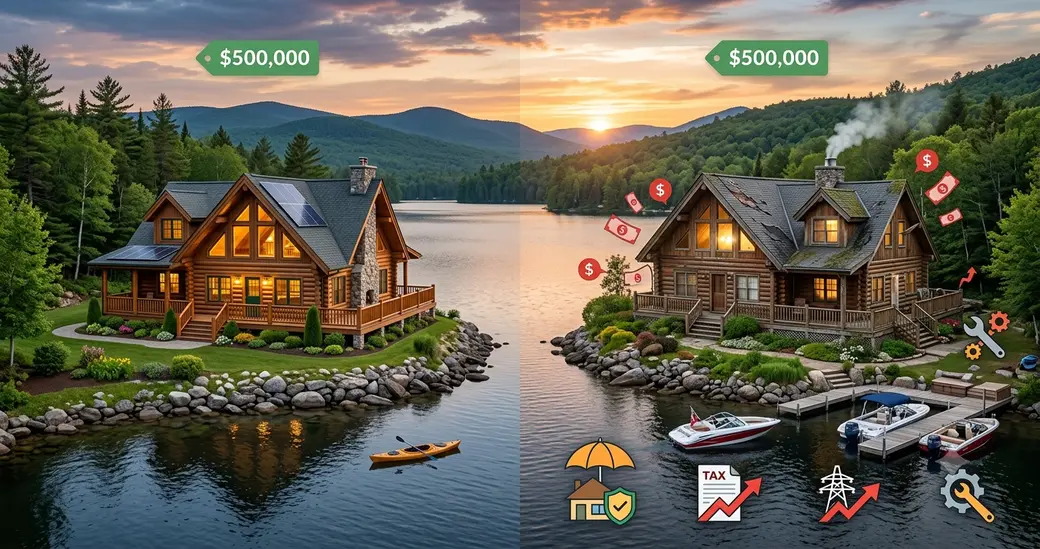
Why do two Adirondack homes with the same price cost different amounts to own? Two Adirondack Park homes listed at the same price can cost thousands of dollars a year apart to own because property taxes, heating, water and septic, road access, and insurance all vary widely from one town, lake, and property to the next. Purchase price is only the down payment on the real number.
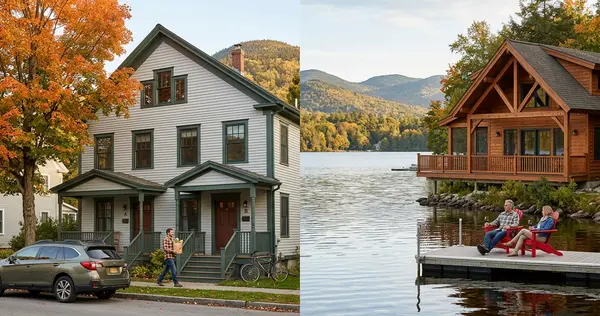
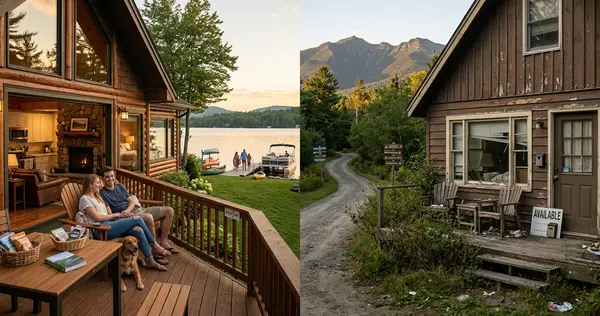
Picture two homes for sale in the Adirondack Champlain Valley, both listed at $450,000. On paper they look like the same decision. One is a tidy year-round home a short walk from the center of a village like Lake Placid, on municipal water and sewer. The other is a lakeside camp on a private seasonal road near Tupper Lake, heated by propane and a woodstove, with its own well and septic. Same price. Same monthly mortgage payment, more or less. And yet one of them can quietly cost you five to eight thousand dollars more every single year to actually live in.
That gap is the part of home buying that listing photos never show. It is also where smart buyers and investors either protect their budget or blow through it. Below are the real cost drivers that separate two identically priced Adirondack homes, plus practical home buying tips for pricing them out before you make an offer.
The Price Tag Is Not the Cost of Ownership
Cost of ownership is the full annual cost of keeping and running a home: taxes, insurance, heat, water, waste, maintenance, and access. In the Adirondack region these line items swing much harder than they do in a typical suburban subdivision, because the housing stock is so varied. You are comparing 1890s farmhouses, mid-century camps, off-grid cabins, and new builds, spread across dozens of towns and school districts, on everything from paved village streets to private dirt roads.
Here is the same-price comparison at a glance, using realistic ranges for the two homes above.
|
Annual cost driver |
Village home (Lake Placid) |
Lakeside camp (near Tupper Lake) |
|
Property taxes |
Moderate town + school rate |
Often higher; waterfront assessment |
|
Heating |
Efficient system, shorter runs |
Propane + wood, older envelope |
|
Water & waste |
Municipal water/sewer fees |
Private well + septic upkeep |
|
Road & snow |
Town-plowed, walkable |
Private road share, seasonal plowing |
|
Insurance |
Standard |
Higher: distance to fire service, water |
|
Relative annual cost |
Lower |
Meaningfully higher |
Neither home is "better." A lakeside camp may be exactly the lifestyle or investment you want. The point is to know the true carrying cost so the comparison is honest.
Property Taxes Vary by Town and School District
Property taxes are usually the single largest recurring cost after the mortgage, and they are set locally. Two homes an easy drive apart can sit in different towns and different school districts, each with its own tax rate, so identical purchase prices can produce very different annual bills.
Waterfront and view lots also tend to carry higher assessments than comparable inland parcels, which pushes the tax line up even when the sale price matches. Before you fall for a listing, pull the current assessment and levy for the specific parcel. New York's official Department of Taxation and Finance publishes how assessments and levies work and links to local rolls, so you can compare two properties on paper rather than on vibes. This is basic due diligence and some of the most valuable investment advice for anyone buying in the Adirondack Park.
Heating Costs: The Adirondack Wild Card
Winters here are long and genuinely cold, and heat is where two same-price homes drift furthest apart. The variables that matter:
- Fuel source. Propane and fuel oil are priced by the gallon and can be expensive; wood, heat pumps, or natural gas (where available) change the math dramatically.
- The building envelope. An uninsulated 1950s camp with single-pane windows can burn through fuel that a tightened, well-insulated home would never need.
- Occupancy. A year-round home is heated constantly; a seasonal camp you winterize has different costs and its own risks (frozen pipes, freeze-ups).
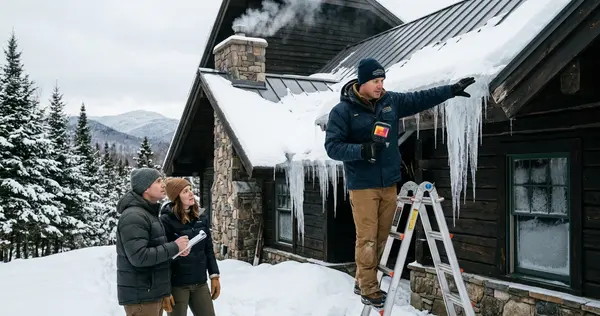
A drafty lakeside camp can easily cost two to three times what an efficient village home costs to keep warm. Ask every seller for 12 months of fuel and electric bills, and factor an energy assessment into your home buying tips checklist. NYSERDA runs New York home-energy programs and assessments, and the federal ENERGY STAR program is a reliable, non-commercial guide to what efficiency upgrades actually pay back.
Water, Well, and Septic
In the villages you may get municipal water and sewer, billed as a predictable annual fee. Out on the lakes and back roads, you own the whole system: a private well and a septic field.
That ownership is fine, millions of homes run this way, but it changes the cost profile. Wells need pumps that fail eventually. Septic systems need pumping every few years and, if neglected or undersized, can cost many thousands to replace. On sensitive shoreline and wetland parcels, replacing a system isn't just a plumbing bill; it can trigger regulatory review. Always budget for a septic inspection during due diligence, and treat a strong system as money in the bank.
Road Access and Snow Removal
How you reach the house is a cost, not a footnote. A home on a town-maintained street is plowed by the town. A camp on a private road usually means a shared road-maintenance agreement and a plowing bill you split with neighbors, and some Adirondack roads are seasonal, meaning they aren't maintained in winter at all.
For a year-round buyer, that can be a deal-breaker or a several-thousand-dollar annual line item. For an investor, seasonal access directly limits when the property can earn. Read the deed, ask for any road agreement in writing, and confirm winter access before you assume two homes are equivalent.
Insurance, Flood Risk, and Distance to Services
Insurance premiums climb with risk, and rural waterfront homes carry more of it: greater distance from a staffed fire department, exposure to wind and water, and sometimes flood-zone status. A lakeside or riverside property may require separate flood coverage that a village home never needs. Check any parcel against the official FEMA Flood Map Service Center before you write an offer, and get a real insurance quote on the specific address rather than a rough estimate.
APA Rules and What They Mean for Your Wallet
The Adirondack Park is a mix of public and private land governed by its own land-use framework, and that framework shapes what you can build, expand, or clear, especially near shorelines and wetlands. Improvements that are routine elsewhere may need permits or setbacks here, which affects both your renovation budget and your long-term flexibility.
None of this makes Adirondack property a bad buy; it makes homework essential. Review the Adirondack Park Agency for land-use classifications and permitting, and the New York State Department of Environmental Conservation for shoreline and wetland rules. For a wider feel for the towns, lakes, and lifestyle across the region, adirondack.net is a solid orientation to the area.
The Investor Angle: Income Can Offset Cost, With Rules
If you're weighing a property as an investment, short-term rental income can offset a higher cost of ownership. Two same-price homes can perform very differently depending on location, access, and local rules. Keep two things front of mind. First, seasonal-access and off-grid camps earn on a shorter calendar. Second, short-term rentals are increasingly regulated at the local level. In Saranac Lake, for example, local ownership and a permit are required to have an STR in village limits, see the Village of Saranac Lake short-term rental law for the specifics. Sound investment advice here starts with the rulebook, then runs the numbers.
A Simple Way to Compare Two Homes Before You Offer
Actionable home buying tips you can use this week:
- Pull the actual tax bill for each parcel, not the estimate, and note the town and school district.
- Request 12 months of utility bills (fuel, electric, water) from each seller.
- Identify the water and septic systems and budget an inspection for private systems.
- Confirm road status (town, private, or seasonal) and get any road agreement in writing.
- Get a real insurance quote on each specific address, including flood if applicable.
- Check APA/DEC constraints on anything you'd want to change.
Run those six steps and the two "identical" $450,000 homes will separate into a clear winner for your goals, whether that's low-hassle year-round living in Lake Placid or a Tupper Lake camp you're happy to fuss over.
Frequently Asked Questions
Which Adirondack costs surprise buyers the most? Heating and private septic/well upkeep are the two that most often catch new owners off guard, followed by private-road plowing. All three can add thousands a year and none of them show up in the listing price.
Are waterfront homes always more expensive to own? Usually, yes, higher assessments, higher insurance, and possible flood coverage push carrying costs up even when the purchase price matches an inland home. Whether that's worth it depends on your use and, for investors, the rental math.
How do I compare property taxes between two Adirondack towns? Pull each parcel's current assessment and the town and school-district tax rates from the New York State Department of Taxation and Finance and the local tax rolls. Two nearby towns can carry meaningfully different rates, so compare the specific parcels rather than assuming they match.
Ready to Compare Homes the Right Way?
Two homes at the same price are rarely the same investment. Before you fall for a listing, get the full carrying-cost picture, and let someone who knows these towns, lakes, and market trends run the numbers with you.
Explore current listings and market updates across Lake Placid, Saranac Lake, Tupper Lake, Keene, and the wider Adirondack Champlain Valley at tinaleonardrealestate.com, subscribe to our newsletter for local market trends, or reach out for personalized advice on any property you're weighing. The team at Tina Leonard Real Estate would be glad to help you buy with your eyes open. Call 518-524-3273 to start the conversation.
Categories
Recent Posts





OUR MISSION
We're proud to be part of the following global networks of distinguished brokerage companies: