Do You Need Adirondack Park Agency Approval to Renovate or Add On?
Do You Need Adirondack Park Agency Approval to Renovate or Add On?
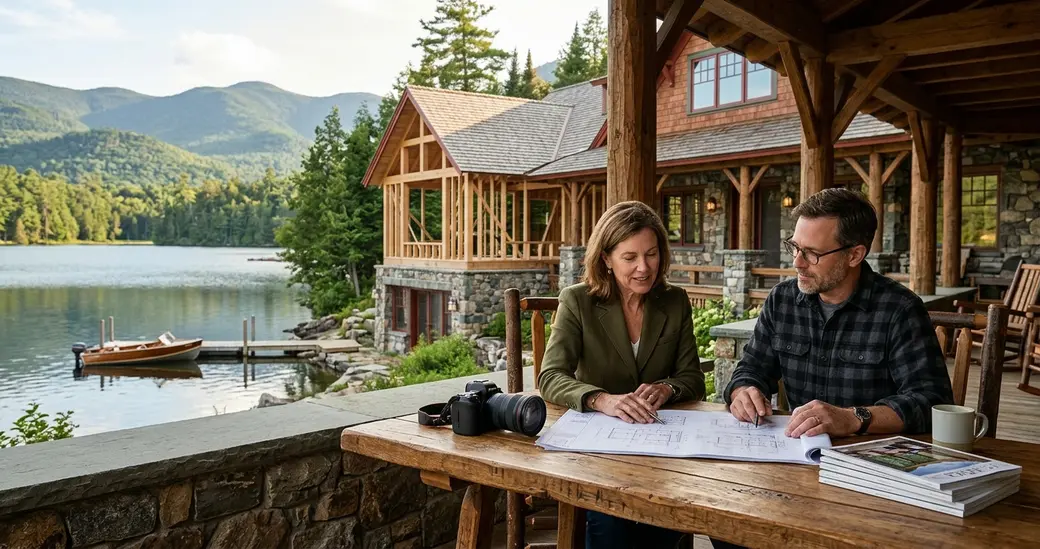
Do you need Adirondack Park Agency approval to renovate or add on to a home? Sometimes. Many interior renovations and modest projects on an already-developed lot move forward with just a local building permit, but additions near shorelines, wetlands, or steep slopes, and projects on certain classified lands, can fall under Adirondack Park Agency (APA) jurisdiction. The only way to know for certain is to confirm your specific parcel before you build, not after.
If you own a home inside the Adirondack Park, or you are shopping for one with a renovation in mind, the question comes up fast: can I just build, or does the Park have a say? It is one of the most common sources of confusion for owners here, and for good reason. The Adirondacks are a six-million-acre mix of public and private land where an extra layer of land-use oversight exists that you simply will not find in a typical suburb.
The good news is that the system is navigable, and plenty of renovations and additions happen across the Park every year. The key is understanding how jurisdiction works, what tends to trigger review, and how to get a clear answer for your property before you pour a footing or sign a contractor's agreement. These are the home buying tips, and homeowner tips, that save people from expensive, stressful surprises.
Two Layers of Approval, Not One
Start with the mental model. A building project inside the Park can involve two separate approvals, and they are not the same thing:
- Your local building department. Towns and villages issue building permits and enforce the New York State building and energy codes. Almost any structural project, an addition, a dormer, a deck, a new septic system, needs this local permit regardless of anything else.
- The Adirondack Park Agency. The Adirondack Park Agency administers the land-use rules that apply to private land across the Park. Whether your project needs APA review depends on the nature of the work, where your land sits, and how that land is classified.
A project can need the local permit and not the APA permit, or it can need both. Treating the two as interchangeable is where owners get into trouble, a local permit does not substitute for Park review when review is required. This is the same two-layer reality we walk through in why new construction isn't always the safe choice in the Adirondacks, and it applies just as much to renovations and additions as it does to building from scratch.
What Tends to Trigger APA Review
Jurisdiction turns on the details of your specific parcel, so treat the following as the factors that commonly raise a flag, not a checklist of hard rules. Projects more likely to involve the Agency include those that:
- Sit near water. Shoreline setbacks and restrictions on building close to lakes, ponds, rivers, and streams are among the most common reasons a lakefront or stream-adjacent addition needs a closer look.
- Affect wetlands. Work in or near regulated wetlands can require review, and wetlands are not always obvious from the surface. The New York State Department of Environmental Conservation oversees many environmental permits that can run alongside APA considerations.
- Expand the footprint on sensitive terrain. Steep slopes, thin soils, and certain land classifications can bring a project into jurisdiction even when a similar project elsewhere would not.
- Add new structures, lots, or uses. Subdividing, adding a second principal building, or changing how a property is used is more likely to require approval than a like-for-like interior remodel.
By contrast, strictly interior renovations, a kitchen remodel, new finishes, mechanical upgrades, on an existing home on an already-developed lot are frequently a local-permit matter. But "frequently" is not "always," and the difference on your lot can hinge on how close you are to water or how your land is classified. When in doubt, assume nothing.
How to Get a Definitive Answer: The Jurisdictional Inquiry
Here is the single most useful thing to know: you do not have to guess. The APA offers a Jurisdictional Inquiry process, where you describe your project and your parcel and the Agency tells you in writing whether it falls under their jurisdiction. The Jurisdictional Inquiry Form is available directly through the Adirondack Park Agency, and submitting one early is the cleanest way to replace uncertainty with a documented answer.
A smart sequence for any Park renovation or addition looks like this:
- Call your town or village code office first. Confirm what the local building permit requires and ask whether they flag the project for APA review.
- Submit an APA Jurisdictional Inquiry when there is any doubt. Especially for anything near water, in or near wetlands, on a steep lot, or that expands the footprint or adds structures.
- Loop in the DEC if wetlands or shorelines are involved. Environmental permits can run on their own track.
- Get the answer in writing before you commit. Do this before hiring a contractor or ordering materials, so your timeline and budget are built on facts rather than assumptions.
That front-loaded homework is the same discipline that protects buyers in buying land in the Adirondacks: read this before you make an offer and the 12 questions most land buyers forget to ask. An hour of inquiry up front can save months of delay.
Why This Matters So Much for Timelines and Budgets
Approvals are not just a paperwork formality, they shape the two things every renovation lives and dies by: schedule and cost. The Adirondack building season is already short, with frozen ground and snow compressing the practical window into the warmer months. If a project stalls because jurisdiction was discovered late, a delay does not slide a week; it can slide to next spring.
There is a resale dimension too. Unpermitted work, whether it skipped a local permit or a required APA approval, can surface during a future sale, complicating financing, appraisal, and buyer confidence, and sometimes forcing costly after-the-fact remediation. Doing it right the first time protects your investment, which is why thoughtful owners treat approvals as part of the project's true cost, the same way we frame hidden ownership costs in why two Adirondack homes with the same price can cost you very different amounts to own. If your renovation is aimed at boosting value before a sale, confirming it is fully permitted is as important as the work itself, a theme that runs through 7 things that increase home value.
Renovating a Home You Already Love, or Buying One to Improve
For current owners, the message is simple: before you expand the deck toward the lake, finish that lakeside bunkhouse, or push out an addition, confirm jurisdiction for your parcel. The character that makes Adirondack homes special, waterfront settings, wooded lots, proximity to wild land, is exactly what the Park's rules are designed to protect, and it is exactly what can bring a project into review. That heritage is part of what makes the region's homes so distinctive, as we explore in what makes Adirondack architecture so unique.
For buyers, factor renovation plans into your due diligence before you make an offer. A home that looks like the perfect candidate for an addition may sit on a parcel where that addition faces real constraints, the kind of thing worth knowing before closing, not after. Our guide to buying an older Adirondack home covers the broader inspection and due-diligence picture these projects fit into. Sound investment advice here always starts with confirming what a property will actually allow.
Frequently Asked Questions
Do interior-only renovations need APA approval? Often not. Strictly interior work, remodeling a kitchen or bath, updating finishes or mechanicals, on an existing home on a developed lot is frequently handled with a local building permit alone. But your parcel's location and land classification can change that, so confirm with your code office and, if there is any doubt, submit an APA Jurisdictional Inquiry.
How do I find out for certain whether my project needs APA review? Use the APA's Jurisdictional Inquiry process. You describe the project and parcel, and the Agency tells you in writing whether it falls under their jurisdiction. Start with your local code office, and submit the inquiry before hiring a contractor so your plan is built on a documented answer.
What happens if I build without a required approval? Unpermitted work can lead to enforcement, after-the-fact remediation, and complications when you sell, affecting financing, appraisal, and buyer confidence. The cost and stress of fixing it later almost always exceed the modest effort of confirming jurisdiction up front.
Build Smart Inside the Park
Renovating or adding on inside the Adirondack Park is entirely doable, owners do it every year. The difference between a smooth project and a stalled one usually comes down to one habit: confirming jurisdiction before you build, instead of discovering it midway through. Replace the guesswork with a quick call to your code office and, when needed, a written answer from the Agency, and you can plan your timeline and budget with confidence.
The team at Tina Leonard Real Estate helps owners and buyers think through renovation potential, understand what a parcel is likely to allow, and connect with the right local professionals. Curious what your home could be worth after the right improvements? Request a home value evaluation, browse current listings, or reach out for guidance on a specific property or project, and build smart inside the Park.
Categories
Recent Posts





OUR MISSION
We're proud to be part of the following global networks of distinguished brokerage companies: