What Most Buyers Don't Realize About Winter Home Inspections
What Most Buyers Don't Realize About Winter Home Inspections
What should buyers know about winter home inspections in the Adirondacks? Snow and frozen ground hide parts of a home an inspector can't fully evaluate, the roof surface, grading, septic field, and central AC, but winter also reveals how the house actually performs in the cold. The fix is a local inspector, a few specialized add-ons, and a re-inspection plan for what snow covers.
Buying a home in the Adirondacks between November and April comes with a quiet catch most buyers never think about: your home inspection is happening on a property that is partly buried in snow and locked in a hard freeze. That does not make a winter inspection a bad idea, in some ways it is the most honest look you will ever get at a cold-climate home, but it does change what the inspection can and cannot tell you.
Here are the home buying tips experienced Adirondack buyers keep in mind so a winter inspection protects them instead of lulling them into a false sense of security.
What Snow and Frost Can Hide
A thorough inspector will tell you plainly when conditions limit what they can assess. In an Adirondack winter, that list can be long:
- The roof surface. Under snow and ice, an inspector often cannot walk or fully evaluate shingles, flashing, or valleys, exactly the components that take the most abuse here.
- Grading and drainage. Frozen, snow-covered ground hides how water moves around the foundation during a thaw, which is where many wet-basement problems begin.
- The septic system and leach field. Frozen soil makes it hard to spot surfacing effluent or drainage issues, and some septic professionals limit testing in deep cold.
- Central air conditioning. Most inspectors will not run an AC system below roughly 60°F because it can damage the unit, so its condition goes unverified until spring.
- Exterior and site details. Driveways, walkways, retaining walls, and landscaping are all partly concealed.
None of this means something is wrong, it means parts of the home are simply unverified, and you should treat them that way in your decision and your contract.
What Winter Uniquely Reveals
Here is the part buyers rarely appreciate: winter is also when a cold-climate home shows its true colors. A summer inspection can't test any of this.
- The heating system under real load. You get to see whether the furnace, boiler, or heat pump actually keeps up on a cold day, not just whether it turns on.
- Drafts and insulation gaps. Cold spots, chilly floors, and uneven rooms are obvious in January in a way they never are in July.
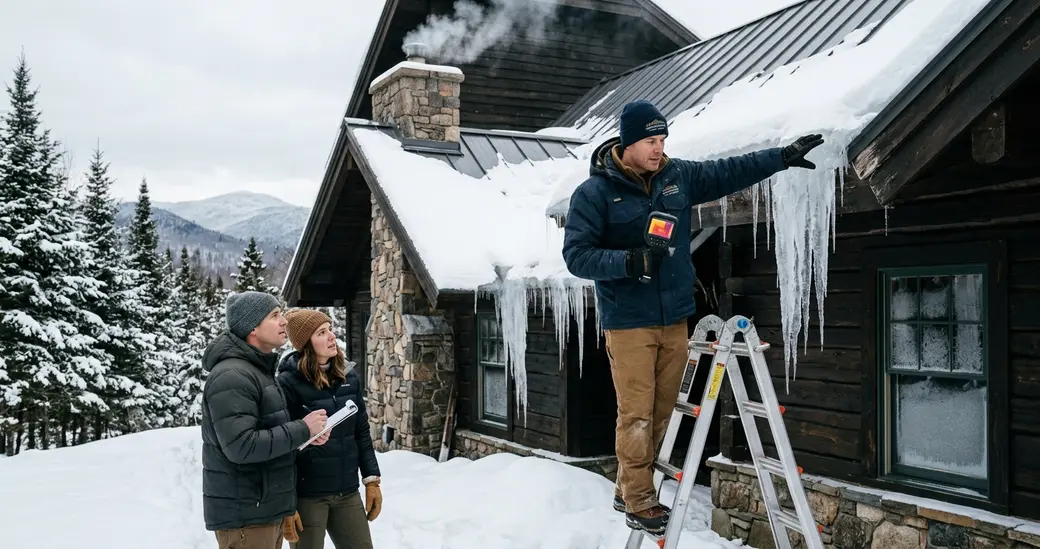
- Ice dams and roof performance. Icicles and ice ridges along the eaves are a live signal of heat loss and ventilation problems.
- Snowmelt and moisture. You can see how the basement and foundation handle melting snow in real time.
A thoughtful buyer uses the season as a diagnostic tool, not just an obstacle. If you want a fuller picture of what these homes endure, our post on what it's really like living through Adirondack winters is a good companion read.
The Adirondack Systems Worth Extra Attention
Rural, cold-climate homes have systems a standard suburban inspection can gloss over. In the North Country, pay close attention to:
- Heating and fuel. Oil, propane, and wood or pellet systems each have their own maintenance and safety profile. If the home has a wood stove or fireplace, have the chimney inspected, the NFPA notes that the peak months for home heating fires are December, January, and February.
- Well and septic. These private systems are common here and are not part of a basic home inspection. Budget for dedicated well-water and septic evaluations.
- Roof and structure for snow load. Confirm the roof and framing are built for genuine Adirondack snow, and ask about any history of ice-dam leaks.
- Plumbing and freeze risk. Look at how pipes in crawl spaces, basements, and exterior walls are protected.
- Radon. It is invisible and odorless, and the EPA advises that all homes be tested, winter, when the house is closed up, is a practical time to do it.
Many of these same cautions apply to any older property; our guide to buying an older Adirondack home walks through what to look for in more detail.
How to Protect Yourself in a Winter Inspection
The goal is simple: get the honest winter insights and cover the winter blind spots. A few practical steps:
- Hire an experienced local inspector. Someone who inspects Adirondack homes year-round knows how to read winter conditions and will document clearly what could not be assessed. You can find credentialed inspectors through InterNACHI.
- Add the specialized inspections. Septic, well, and chimney evaluations are separate from a general inspection and matter more here than almost anywhere.
- Build in a re-inspection contingency. For snow-covered items like the roof, grading, and AC, negotiate the right to re-inspect once conditions allow, or a holdback for verification in spring.
- Read the seller's disclosures closely. Ask directly about roof age, ice-dam history, heating costs, and any past freezing or water issues.
- Don't skip the inspection to win a fast deal. Winter can be a quieter market with motivated sellers, but that is no reason to waive your most important protection. Our post on the biggest closing-day surprises and how to avoid them shows how often skipped due diligence comes back to bite.
Smart investment advice in this market always starts with knowing exactly what you are buying, and a winter inspection, handled well, gets you most of the way there.
Frequently Asked Questions
Is it a bad idea to buy a home in winter in the Adirondacks? Not at all. Winter buyers often face less competition and can see how a home truly performs in the cold. The key is understanding that snow limits parts of the inspection and planning around those blind spots with specialized inspections and a re-inspection contingency.
Can a home inspector check the roof in winter? Often only partially. Snow and ice can prevent an inspector from walking or fully evaluating the roof surface and flashing. A good inspector will note the limitation, and you can negotiate the right to re-inspect the roof once it is clear.
What inspections do Adirondack buyers need beyond a standard home inspection? Plan for separate well-water and septic evaluations, a chimney inspection if there is a wood stove or fireplace, and a radon test. These rural, cold-climate systems are not covered by a basic inspection but are essential to understand before you buy.
Buy With Clear Eyes This Winter
A winter home inspection is not something to fear, it is something to do well. Handled right, the season gives you an unusually honest look at how a home holds up when it matters most, as long as you account for what the snow is hiding.
The team at Tina Leonard Real Estate helps Adirondack buyers line up the right inspectors, ask the right questions, and structure offers that protect them through every season. Browse current listings or reach out for guidance on a specific home, and buy with clear eyes, no matter what is on the ground.
Categories
Recent Posts



OUR MISSION
We're proud to be part of the following global networks of distinguished brokerage companies: