Home Insurance Questions Every Adirondack Property Owner Should Ask
Home Insurance Questions Every Adirondack Property Owner Should Ask
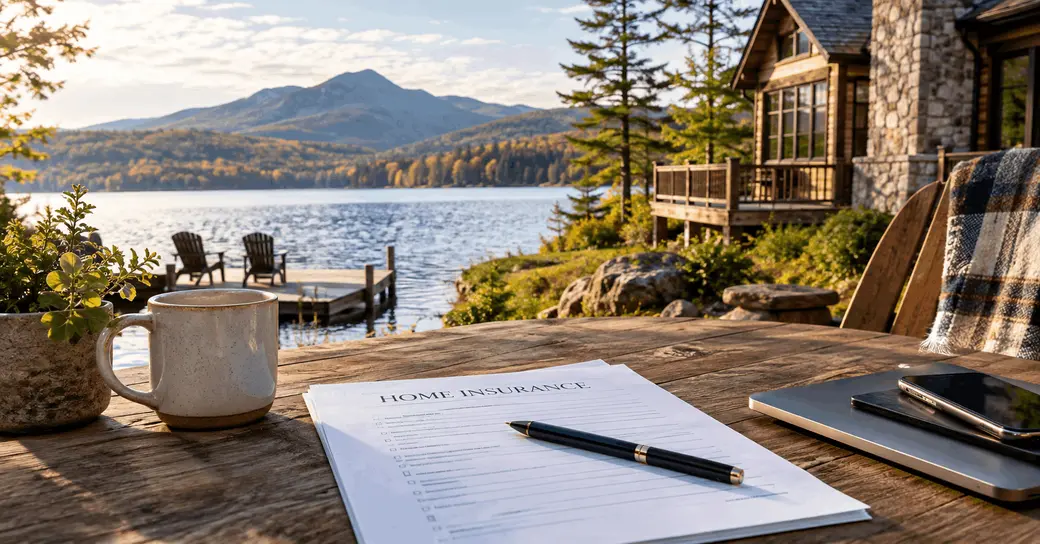
What home insurance questions should Adirondack property owners ask? Before you buy or renew, confirm your replacement cost coverage, whether flood is included, how seasonal or rental use affects your policy, and how rural fire protection and winter risk shape your premium in the Adirondack–Champlain Valley region.
Buying a home in the Adirondacks is a little different from buying almost anywhere else in New York State. The same features that make a lakeside cottage in Essex County or a four-season retreat near Lake Placid so appealing, remote settings, older construction, waterfront access, heavy snow, and long stretches of forest, are exactly the features that insurance companies scrutinize the hardest. A policy that looks affordable on paper can leave you dangerously underinsured if you don't ask the right questions up front.
Whether you're a first-time buyer, a seasonal homeowner, or an investor weighing a second property, understanding your coverage is one of the most overlooked home buying tips in our region. The right questions protect your finances and your peace of mind. Below are the home insurance questions every Adirondack property owner should ask before signing a policy, and why each one matters here in Clinton, Essex, and Franklin counties.
Does My Policy Cover Full Replacement Cost, Not Market Value?
This is the single most important question, and it trips up more Adirondack buyers than any other. Replacement cost is what it would take to rebuild your home with today's materials and labor. Market value is what someone would pay for it. In remote parts of the Adirondack Park, those two numbers can be worlds apart.
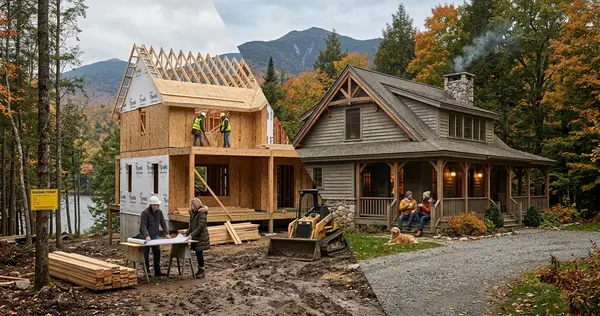
Rebuilding in a rural area means hauling materials up narrow seasonal roads, sourcing scarce contractors, and often meeting Adirondack Park Agency requirements. Those costs add up fast. Ask your insurer:
- Is my dwelling insured for full replacement cost or actual cash value (which deducts depreciation)?
- Does the policy include an extended or guaranteed replacement cost rider to cover construction cost spikes?
- When was the rebuild estimate last updated to reflect current market trends in building materials and labor?
Is Flood Damage Covered, and Do I Actually Need It?
Here's a fact that surprises many new owners: standard homeowners insurance does not cover flood damage. If your property sits near Lake Champlain, the Saranac River, one of the region's countless ponds, or in a low-lying area prone to snowmelt and spring runoff, this is not a detail to skip.
Flood coverage generally comes through the National Flood Insurance Program. Start by checking your property's flood zone on the FEMA Flood Map Service Center, then learn how coverage works at FloodSmart.gov. Even properties outside a mapped high-risk zone can flood, so ask whether a modest policy makes sense as a safeguard.
Questions worth asking:
- What flood zone is this property in, and has that designation changed recently?
- Is flood insurance required by my lender, or optional but advisable?
- Does a separate policy cover both the structure and its contents?
How Does Seasonal or Second-Home Use Change My Coverage?
Many Adirondack homes sit empty for weeks or months at a time. Insurers treat a vacant or seasonally occupied home very differently from a primary residence, because an unoccupied house is more vulnerable to undetected leaks, frozen pipes, and break-ins.
If your Tupper Lake camp or Keene Valley getaway is used only part of the year, ask whether you need a seasonal dwelling policy or a vacancy provision. Some standard policies limit or exclude claims once a home has been empty beyond a set number of consecutive days. Clarifying this before a claim, not after, can save you thousands.
What About Short-Term Rental Use?
If you plan to rent your property to guests, your standard homeowners policy almost certainly won't cover commercial activity. Renting introduces liability and property risks that require a landlord policy, a short-term rental endorsement, or a commercial policy. For investors, confirming this coverage is essential investment advice that too many owners learn the hard way.
Rental rules also vary sharply by municipality. In the Village of Saranac Lake, for example, local ownership and a permit are required to have a short-term rental within village limits, review the current Saranac Lake short-term rental law before you count on rental income. Confirm both your insurance and your local permitting before you list a single night.
Am I Protected Against Winter and Rural-Specific Risks?
Adirondack winters are long, and they create hazards that policies elsewhere in New York rarely address. Ask specifically about:
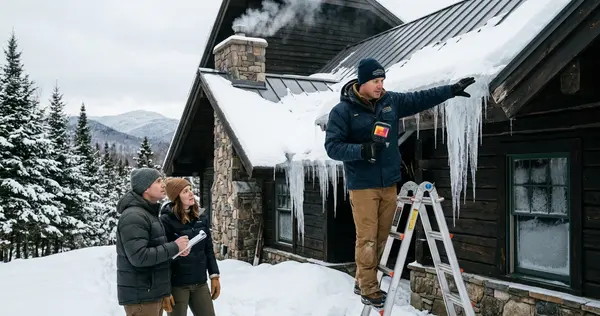
- Snow and ice load: Does the policy cover roof collapse from heavy snow, and ice-dam water intrusion?
- Frozen pipes: Is burst-pipe damage covered, and are there requirements (like maintaining heat) you must meet to keep that coverage valid?
- Heating systems: Wood stoves, pellet stoves, and supplemental heat sources often trigger inspections or affect eligibility. Disclose them.
- Detached structures: Are boathouses, docks, garages, guest cabins, and sheds covered, and at what limits?
How Do Fire Protection and Location Affect My Premium?
Insurers price rural homes partly on their distance from a staffed fire department and a water source. A property miles from the nearest hydrant or volunteer station in Franklin County may carry a higher premium than a comparable home in a village center. Wooded lots also carry wildfire considerations worth discussing. Ask how your specific location is rated, and whether steps like clearing brush, upgrading a wood stove installation, or adding monitored alarms could lower your cost.
For broader context on how homeowners insurance is regulated and what your rights are as a policyholder in New York, the New York State Department of Financial Services maintains a consumer guide that's worth bookmarking.
What Deductibles and Liability Limits Actually Apply?
Finally, read the fine print on deductibles and liability. Some policies carry separate, higher deductibles for wind or hail. Waterfront properties with docks, guests, and recreational equipment like ATVs or snowmobiles carry real liability exposure. Ask whether an umbrella policy makes sense, especially if the home is an income property or hosts guests regularly.
Frequently Asked Questions
Why is home insurance more expensive for Adirondack properties? Premiums reflect rural fire protection ratings, distance from hydrants, older construction, waterfront and flood exposure, and heavy winter risk. Homes far from a staffed fire department or in wooded, flood-prone areas typically cost more to insure than village homes.
Do I need flood insurance if my Adirondack home isn't on the water? Possibly. Standard homeowners policies never cover flood, and snowmelt, spring runoff, and heavy rain can flood properties outside mapped high-risk zones. Check your flood zone on the FEMA map and weigh a modest National Flood Insurance Program policy as a safeguard.
Does my homeowners policy cover renting my Adirondack home to guests? Generally no. Standard homeowners insurance excludes commercial rental activity. You'll likely need a landlord policy or short-term rental endorsement, and you must also confirm local permitting rules, which vary by town and village.
Talk Through Your Coverage Before You Buy or Renew
Insurance is one piece of a smart Adirondack real estate decision, and it's far easier to get right when you understand the property, the market, and the local rules before you commit. That's where working with an experienced local brokerage pays off.
Whether you're exploring listings across the Adirondack–Champlain Valley, planning a move, or weighing a property as an investment, the team at Tina Leonard Real Estate can help you understand what to look for and what questions to bring to your insurer. Ready to take the next step? Reach out at 518-524-3273 or visit tinaleonardrealestate.com to explore current listings and get personalized guidance on your next Adirondack home.
Categories
Recent Posts


OUR MISSION
We're proud to be part of the following global networks of distinguished brokerage companies: