
What Makes Adirondack Architecture So Unique?
What Makes Adirondack Architecture So Unique?
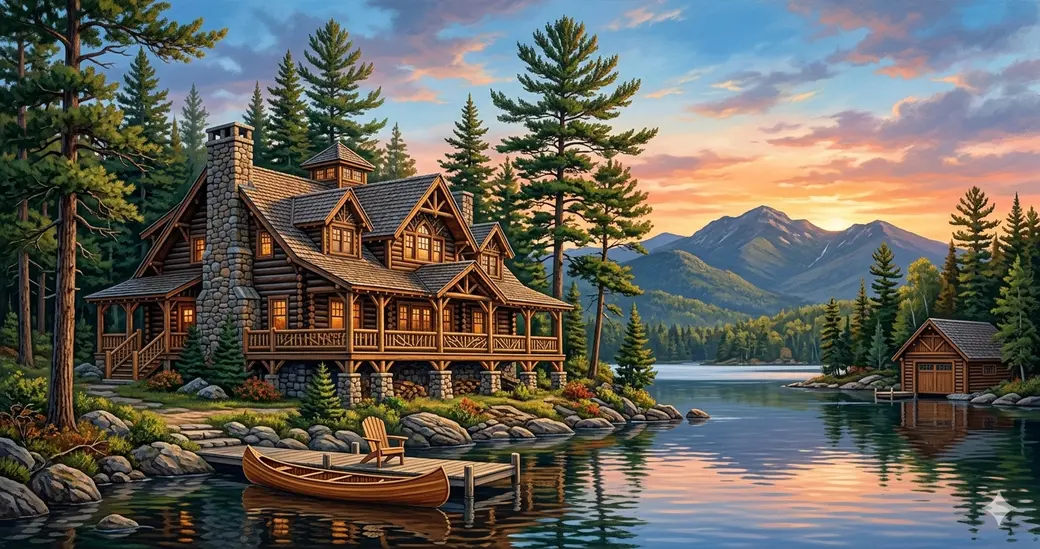
What makes Adirondack architecture so unique? Adirondack architecture is a one-of-a-kind American vernacular style defined by native stone, hand-hewn timber, bark-covered log construction, and a design philosophy that prioritizes harmony with the surrounding wilderness.
If you've ever stepped inside an Adirondack great camp and felt like the building itself was part of the forest, that's not an accident. It's the point. The architecture of the Adirondack region is unlike anything else in the country, not just visually, but philosophically. It grew out of a specific place, a specific era, and a specific way of thinking about how humans should relate to the natural world.
For buyers exploring homes in Lake Placid, Saranac Lake, Wilmington, Keene, Jay, or the surrounding Adirondack communities, understanding this architectural tradition isn't just an interesting history lesson. It's essential context for evaluating what you're buying, and why properties that honor this legacy tend to hold their value in ways that generic construction simply doesn't.
The Origins: Great Camps and Gilded Age Vision
The Adirondack style as we know it today traces directly to the Great Camps of the late 19th century. Wealthy industrialists, the Vanderbilts, the Harrimans, the Durants, came to the Adirondacks to escape the city and commune with nature. But they didn't want to rough it. They wanted to bring comfort into the wilderness without disturbing it.
William West Durant is widely credited with codifying the Adirondack camp aesthetic in the 1870s and 1880s. His camps, including Camp Pine Knot on Raquette Lake, established the defining elements: log and bark siding applied over traditional framing, native stone fireplaces, peeled-pole railings, and structures that seemed to grow organically from their sites. Durant understood that the architecture should feel discovered rather than imposed.
The Adirondack Experience museum in Blue Mountain Lake preserves this history with one of the most important collections of Adirondack material culture in existence. If you're serious about understanding the region you're buying into, a visit is well worth your time.
The Core Elements of Adirondack Design
Native Materials, Always
The most defining characteristic of authentic Adirondack architecture is its insistence on local materials. Stone was quarried from nearby outcrops. Timber, white pine, hemlock, spruce, birch, came from the surrounding forest. Even decorative elements like twig inlay, birch bark paneling, and branch-form furniture were sourced directly from the land.
This wasn't just an aesthetic choice. It was a practical one. Transporting materials into the remote Adirondack interior was expensive and difficult. But over time, what started as necessity became an enduring design principle: the right building for this landscape is one made from this landscape.
The National Park Service's documentation of vernacular American architecture places Adirondack camp construction in a distinguished category of regional building traditions that are inseparable from their geography.
The Multi-Building Camp Model
Unlike a single unified structure, the traditional Adirondack camp is a compound, a cluster of smaller buildings, each serving a specific function. A main lodge for dining and gathering. Separate sleeping cabins for guests. A boathouse. A guides' quarters. A caretaker's cottage.
This approach had practical origins: it allowed camps to be built incrementally, gave guests privacy, and reduced fire risk. But it also created something architecturally rich: a sense of organic settlement, as if the camp had always been there and grown slowly over time.
Many of the properties you'll find for sale in the Adirondacks today reflect this compound tradition, multi-structure lots where each building has a distinct character and purpose. Understanding the original intent of this model helps buyers appreciate both the value and the responsibility of stewardship these properties carry.
The Rustic Interior
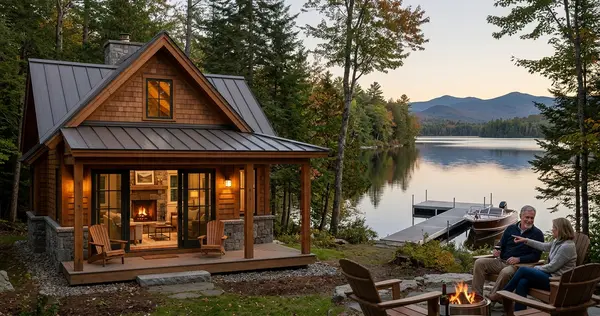
Step inside an authentic Adirondack home and you'll typically find exposed log or timber framing, cathedral ceilings with visible roof structure, massive stone fireplaces, and a warm, amber-lit palette driven by natural wood. Windows are generous, often floor-to-ceiling, oriented toward water or mountain views. The boundary between inside and outside is deliberately blurred.
The American Institute of Architects recognizes this regional tradition as one of the earliest examples of site-responsive design in American architecture, a precursor to what we now call sustainable or place-based building.
Rustic interiors aren't just cozy. They're an intentional design argument: that comfort doesn't require separation from nature, and that beauty is most powerful when it's honest about its materials.
How the Adirondack Park Agency Shapes Architecture Today
One reason Adirondack architecture has retained its character across 150 years is the regulatory environment that governs the region. The Adirondack Park, at approximately six million acres, is the largest publicly protected area in the contiguous United States. Its land-use framework, administered by the Adirondack Council and the Adirondack Park Agency, places meaningful constraints on development density, shoreline setbacks, structure height, and lot coverage.
These aren't bureaucratic obstacles. They're supply-side protectors. The APA's regulations make it structurally impossible for the Adirondacks to be overdeveloped the way other desirable regions have been. That scarcity is one of the most important investment principles a buyer can internalize.
For buyers, this means: properties that fit within the existing architectural vocabulary of the region, log construction, natural materials, modest footprints, site-sensitive siting, tend to face fewer regulatory challenges than those that don't. When you're evaluating a home here, understanding its relationship to APA classifications isn't just due diligence. It's market intelligence.
Why Adirondack Architecture Holds Investment Value
The real estate investment case for authentically designed Adirondack properties is straightforward once you understand the fundamentals.
Supply is structurally constrained. New construction in the Adirondacks is limited by the APA, watershed protections, and Forever Wild designations on state land. You cannot simply build more. This keeps inventory tight and demand competitive, particularly for waterfront and camp-style properties.
Demand is accelerating. Remote work has permanently expanded the pool of buyers willing to relocate to mountain communities. The Adirondacks, with their proximity to major northeastern metros and their unmatched quality of life, are capturing a meaningful share of that migration. Adirondack.net tracks regional tourism and lifestyle trends that consistently reflect this upward pressure on buyer interest.
Authenticity commands a premium. Buyers, particularly those with the means to choose, are not looking for a generic house that happens to be near a mountain. They're looking for the real thing: hand-hewn beams, stone hearths, a boathouse on the lake. Properties that deliver architectural authenticity consistently outperform those that don't when it comes to long-term appreciation and resale velocity.
Preservation-minded buyers are a growing market. Organizations like the National Trust for Historic Preservation have documented rising interest in historic camp properties and vernacular architecture across the country. Buyers who purchase with stewardship in mind tend to be serious, financially stable, and committed, which is good for every seller in the market.
What to Look For When Buying an Adirondack Home
If you're using architectural authenticity as part of your investment thesis, here are the markers worth evaluating:
Original or period-appropriate materials. Bark siding, peeled log construction, locally quarried stone, these signal a property built within the regional tradition. Later renovations that use vinyl, fiber cement, or other synthetic cladding often reduce character without adding durability in the mountain climate.
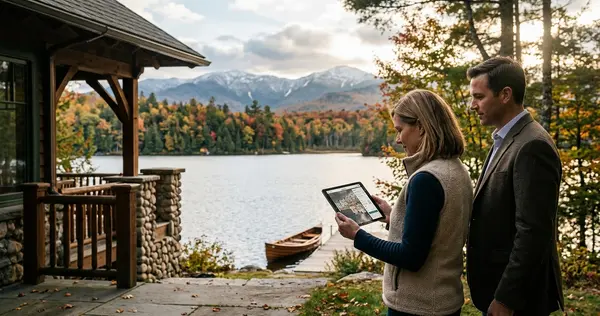
Site relationship. Authentic Adirondack camps were sited with obsessive attention to view corridors, solar orientation, and shoreline placement. If a property feels like it belongs exactly where it is, nestled into a hillside, framing a lake view, that's not luck. It's intentional design, and it's worth paying for.
Structural integrity of log and timber elements. Log construction requires different maintenance than stick-built homes. Check for checking (the natural cracking of logs as they dry), settlement in log walls, and the condition of chinking. A qualified inspector with log home experience is essential in the Adirondacks. The Adirondack Almanack regularly covers regional building and preservation topics that can help you understand what you're evaluating.
Multi-structure lots. If the property includes outbuildings, a guest cabin, boathouse, or caretaker's cottage, understand what APA classification governs each structure and what use rights apply. These details affect both your enjoyment of the property and its future marketability.
Waterfront setbacks and dock rights. Waterfront properties are subject to stringent APA shoreline protections. Confirm that any existing docks, boathouses, or shoreline improvements are permitted and compliant. Unpermitted structures create liability and can complicate a sale.
Frequently Asked Questions
Is Adirondack-style architecture only found in the Adirondack Park? The Adirondack style originated here and remains most authentic in the six-million-acre park, but its influence has spread broadly across North American vacation and mountain home design. Elements like log construction, stone fireplaces, and rustic interiors appear in mountain properties from the Rockies to the Smokies. The difference is context: in the Adirondacks, the style is indigenous. Elsewhere, it's an homage.
Does buying a historic camp or log home require special financing? Some lenders apply additional scrutiny to log homes, particularly older structures, because of perceived maintenance concerns. However, well-maintained log and timber properties in the Adirondacks are entirely financeable through conventional and jumbo loan products. Working with a buyer's agent who understands the local market, and can help you anticipate lender requirements, is important.
How does APA regulation affect what I can do with an Adirondack property I purchase? The APA's jurisdiction affects everything from additions and new structures to septic system placement and shoreline modifications. The specific rules that apply depend on how your parcel is classified within the APA's land-use map, and those classifications vary significantly even within the same community. This is one of the most important conversations to have with your agent before making an offer.
Ready to Find Your Place in the Adirondacks?
Adirondack architecture isn't just a style. It's a philosophy, one that says the best home is the one that fits its place, built from honest materials, designed to last generations, and oriented toward the view that makes you feel most alive.
If you're ready to explore what that looks like in practice, whether you're drawn to a lakefront camp in Saranac Lake, a mountain retreat near Whiteface, or a craftsman camp home on the outskirts of Lake Placid, We’d love to walk you through what's available and what to look for.
Browse current Adirondack listings at tinaleonardrealestate.com, to start a conversation about your search. We've spent years helping buyers navigate this market, the architecture, the APA, the nuances of waterfront due diligence, and we can help you find a property that's worth buying and built to keep.
Categories
Recent Posts





"My job is to find and attract mastery-based agents to the office, protect the culture, and make sure everyone is happy! "