
What Sellers Won't Tell You About Waterfront Living
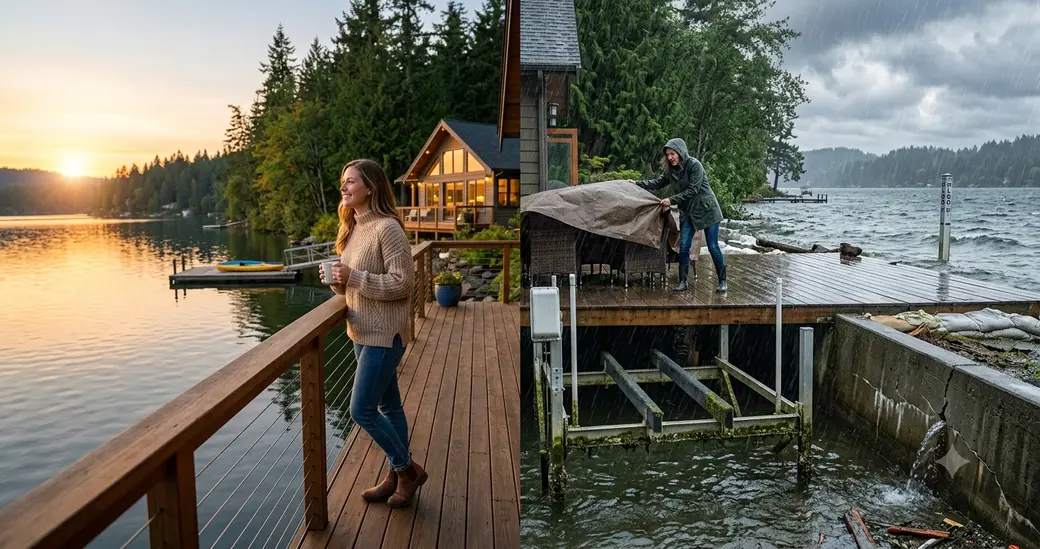
What Sellers Won't Tell You About Waterfront Living
What do sellers leave out when marketing Adirondack waterfront homes? Waterfront properties in the Adirondack region come with costs, regulations, and seasonal realities that listing photos never capture, and that most sellers won't volunteer upfront.
Scroll through any waterfront listing in Lake Placid, Saranac Lake, or Tupper Lake and the story tells itself in wide-angle shots: a glassy lake at golden hour, a dock with two Adirondack chairs, the kind of stillness that makes city noise feel like a distant rumor. It's a compelling picture. It's also an incomplete one.
Waterfront real estate is among the most emotionally driven purchases in any market, and that emotion is exactly what sellers count on. The views are real. The lifestyle is real. But so are the insurance premiums, the zoning restrictions, the dock permits, and the septic systems that no one puts in the listing remarks. Before you make one of the most significant investment decisions of your life, you deserve the full picture.
This post covers what sellers routinely leave out, and what smart buyers, armed with the right home buying tips and market knowledge, need to know before they sign anything.
The True Cost of Waterfront Ownership Goes Far Beyond the Purchase Price
When buyers focus exclusively on the listing price, they're looking at only one layer of a multi-layered financial commitment. Waterfront properties in the Adirondack region carry a distinct set of ongoing costs that can catch first-time lake home buyers completely off guard.
Flood Insurance Is Almost Never Optional
Standard homeowners insurance does not cover flood damage. If your property sits in a FEMA-designated flood zone, and many lakefront parcels do, you'll be required to carry a separate flood insurance policy through the National Flood Insurance Program. Depending on elevation, flood zone designation, and structure value, annual flood insurance premiums can range from a few hundred to several thousand dollars per year.
Before making an offer, request the property's current Elevation Certificate and ask your real estate agent to pull the FEMA flood map designation. A home that sits in Zone AE or Zone VE carries meaningfully different risk, and meaningfully different costs, than one in Zone X.
Dock and Shoreline Structure Maintenance
That beautiful dock in the listing photos? It belongs to you now, along with every repair, winterization, and eventual replacement bill that comes with it. Wood docks in the Adirondacks typically require annual maintenance, staining or sealing every few years, and full replacement every 15 to 25 years depending on construction quality and ice conditions. Crib docks and floating docks have different lifespans and cost profiles.
What sellers rarely mention: dock permits are not automatically transferable. If a dock was installed or modified without proper permitting, you, as the new owner, inherit that liability. Confirm that all shoreline structures have current permits before closing.
Septic Systems: Out of Sight, Out of Mind (Until They're Not)
Most waterfront properties in rural Adirondack communities are not connected to municipal sewer systems. They rely on private septic systems that must be maintained and, eventually, replaced. Septic replacement costs in the region typically run $15,000 to $40,000 or more depending on soil conditions, lot size, and system type.
More importantly, the New York State Department of Environmental Conservation and the Adirondack Park Agency impose strict rules on septic placement near water bodies. If the existing system is aging, undersized, or improperly sited, you may face significant compliance costs after purchase.
Always request a septic inspection, not just a visual look, but a full pump and evaluation, as part of your due diligence.
Adirondack Park Regulations Shape What You Can (and Can't) Do
Buying waterfront property anywhere in the Adirondack Park means buying into one of the most regulated land use environments in the country. The Adirondack Park Agency classifies land throughout the six-million-acre park into use categories, Hamlet, Moderate Intensity Use, Low Intensity Use, Rural Use, Resource Management, and Industrial Use, and each category comes with specific rules about what can be built, expanded, cleared, or disturbed.
Sellers are not always forthcoming about how these restrictions affect what you can do with the property after you own it.
Setback Requirements from Shorelines
APA regulations require specific setback distances between structures and water bodies. Depending on the land classification, buildings may need to be set back 50 to 100 feet or more from the mean high-water mark. This directly limits where you can build an addition, expand a deck, or construct a new outbuilding. If you're buying with plans to add a boathouse, expand the footprint, or build a guest cottage closer to the water, those plans may not survive the permitting process.
Clearing and Vegetation Rules
One of the most common surprises for new waterfront owners: you may not be able to clear trees or vegetation on your own property without a permit. The APA regulates shoreline vegetation to protect water quality and wildlife habitat. "Selective" clearing near the water often requires agency approval, and unpermitted clearing can result in fines and mandatory restoration at the owner's expense.
Ask the seller directly: has any clearing been done on the property in the last five years? And if so, was it permitted?
Accessory Structure and Guest Cottage Limitations
Many buyers purchase Adirondack waterfront properties with the intention of building a guest cottage, a writer's studio, or additional sleeping space for family. These plans frequently run into APA restrictions on the number, size, and placement of accessory structures. Confirming what's allowable before you buy, not after, is essential due diligence.
Seasonal Access and Year-Round Livability
The Adirondack lifestyle is genuinely four-season, but not all waterfront properties are built for it. Sellers marketing summer retreats don't always highlight what winter looks like.
Road Access in Winter
Some of the most stunning waterfront parcels in the region sit at the end of private roads or seasonal roads that are not maintained by the town. That means plowing is your responsibility, or it's coordinated, and billed, through a private road association. In a heavy snow year, the cost and logistics of keeping a remote property accessible from November through April can be substantial.
Before you fall in love with a location, confirm: who maintains the access road? Is it a town road, a private road, or a seasonal road closed in winter entirely?
Well and Water System Performance in Cold Weather
Properties that rely on private wells, which is most rural Adirondack waterfront, need well lines and pressure systems that are properly insulated and winterized. A well line that freezes is not a minor inconvenience; it's a potentially expensive repair that leaves you without water until the ground thaws or an excavator arrives.
Heating Systems and Energy Costs
Waterfront properties often feature large glass-forward designs that showcase the views, and bleed heat in winter. If the home has older single-pane windows, limited insulation, or an aging boiler, your heating costs will reflect it. Ask for at least two years of utility bills as part of your due diligence. This is one of the clearest windows into what you're actually buying.
Waterfront Investment Value: What the Data Actually Supports
There's a persistent belief among buyers that waterfront properties are recession-proof investments that appreciate automatically. The National Association of Realtors and broader housing data do support waterfront premiums, lake and river-adjacent homes typically command 25% to 50% or more over comparable inland properties, but that premium comes with nuance.
According to Redfin's market analysis tools, waterfront inventory nationwide remains constrained, which supports long-term price stability. But in specific markets like the Adirondacks, appreciation is also shaped by APA regulatory constraints on new development, which limits supply in ways that benefit existing owners. You're not just buying a house; you're buying into a market with structurally limited competition.
That said, investment value is not guaranteed. Properties with deferred maintenance, regulatory compliance issues, aging septic systems, or access limitations trade at meaningful discounts, and for good reason. The market sees through cosmetic staging faster than most buyers do.
Buyers researching investment potential should also consult Zillow's market data for broader Adirondack region comparables and review Tina Leonard Real Estate's local market resources for Adirondack-specific insights that national platforms don't capture.
Environmental Conditions Sellers Rarely Volunteer
Water quality is not a given, and it can change. Lakes and ponds throughout the Adirondack region have varying levels of invasive species pressure, algae bloom risk, and pH levels, all of which affect both the recreational experience and, in some cases, the usability of the water.
The EPA's water quality resources and New York State DEC provide public data on water body health, but many buyers never look it up. Ask the seller when they last had the water quality tested and whether there have been any algae bloom events. Loons, herons, and otters on the lake are wonderful signs; blue-green algae blooms, which can be toxic to pets and people, are not.
Also worth investigating: New York State DOS shoreline and riparian rights documentation explains what rights attach to your property at the water's edge, and where your ownership ends and the lake's public trust begins.
What to Do Before You Make an Offer
Smart buyers in the Adirondack waterfront market work from a due diligence checklist that goes well beyond the standard home inspection. Before making an offer, confirm:
- Current FEMA flood zone designation and flood insurance cost estimates
- APA land classification and permitted uses for the parcel
- Status of all dock and shoreline structure permits
- Septic system age, type, last inspection date, and compliance status
- Road maintenance responsibility and winter access conditions
- Well depth, water quality test results, and pressure system condition
- At least two years of utility bills
- Any history of clearing, grading, or shoreline modification, and whether it was permitted
Your real estate agent should help you obtain and review this information before you're emotionally committed to a purchase. A beautiful lake view is worth exactly what it costs if the infrastructure and regulatory picture support it, and significantly less if they don't.
FAQ: Waterfront Buying in the Adirondacks
Do I need a special permit to use a dock on an Adirondack lake? In most cases, yes. New dock construction and significant modifications typically require permits from the Adirondack Park Agency and sometimes the NYS DEC, depending on the water body and the structure type. Existing docks may have been grandfathered, but buyers should verify permit status before assuming continued legal use.
Is waterfront property in the Adirondacks a good long-term investment? Waterfront properties in the Adirondack Park benefit from constrained supply, APA regulations limit new development, which structurally supports existing property values over time. That said, investment returns depend heavily on condition, regulatory compliance, and location-specific factors. Properties with deferred maintenance or compliance issues carry real downside risk.
What's the biggest mistake first-time waterfront buyers make? Underestimating total cost of ownership. Purchase price is one data point; flood insurance, dock maintenance, septic management, private road upkeep, and heating costs can add tens of thousands of dollars annually. Buyers who model only the mortgage payment often find waterfront ownership more financially demanding than anticipated.
Ready to Buy Waterfront the Right Way?
The Adirondacks are one of the most extraordinary places in New York to own property, and waterfront living here is everything the photos suggest, when you go in with open eyes and the right guidance.
At Tina Leonard Real Estate, LLC, we specialize in helping buyers navigate the full picture of Adirondack waterfront ownership: the APA regulations, the due diligence checklist, the seasonal realities, and the market dynamics that determine real value. We've been recognized three consecutive years as the best real estate office in the region, not because we make the process sound easy, but because we make it honest.
If you're serious about waterfront property in Lake Placid, Saranac Lake, Wilmington, Jay, Keene, or Tupper Lake, let's talk before you fall in love with a listing.
Explore our current waterfront listings at tinaleonardrealestate.com or reach out directly for a personalized conversation about what waterfront ownership actually looks like in this market.
Categories
Recent Posts









"My job is to find and attract mastery-based agents to the office, protect the culture, and make sure everyone is happy! "