
Seasonal Camp or Year-Round Home? How to Decide in the Adirondacks
Seasonal Camp or Year-Round Home? How to Decide in the Adirondacks
Should you buy a seasonal camp or a year-round home in the Adirondacks? Buy a year-round home if you need a winterized primary residence with reliable, plowed access. Choose a seasonal camp if you want a lower-cost getaway or an investment property in the Champlain Valley you'll use part of the year.
It's one of the first real forks in the road for anyone shopping in the Adirondack–Champlain Valley region: a rustic camp on the water that you close up for winter, or a four-season home you can live in every day. Both can be excellent decisions. They are also very different purchases, with different price tags, financing paths, and long-term costs.
The word "camp" trips up a lot of out-of-area buyers. In much of the country, a second home is a second home. Here in the Adirondacks, "camp" is a specific kind of property with its own quirks, and treating it like a standard year-round house is one of the most common mistakes we see. Getting this distinction right early saves you money, surprises, and more than a few frustrating conversations with lenders and insurers.
Below are the home buying tips our team walks buyers through when they're deciding between the two, plus a look at the market trends and investment advice that should shape your choice.
What "Camp" Actually Means in the Adirondacks
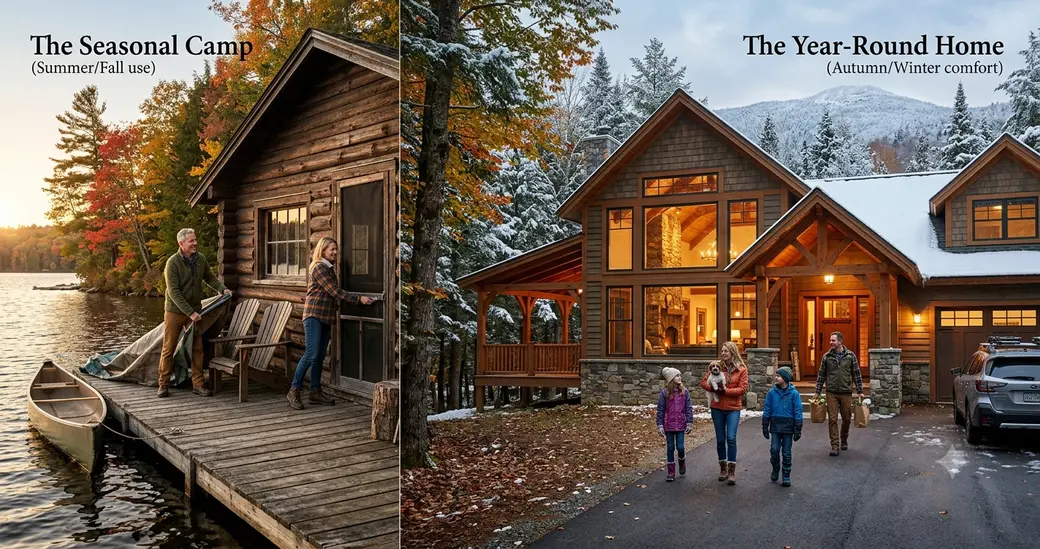
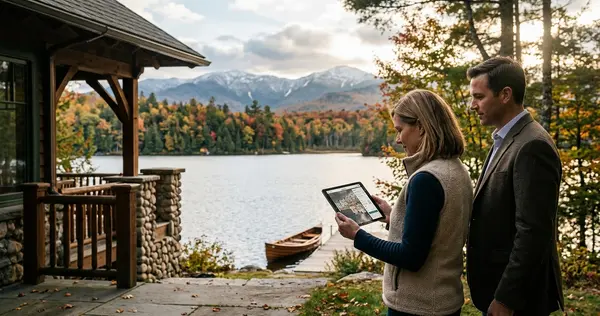
In the six-million-acre Adirondack Park, a "camp" is traditional shorthand for a seasonal or recreational property, often lakefront or tucked into the woods, and frequently not built for year-round living. That can mean any combination of the following:
- Not fully winterized, limited or no insulation, seasonal plumbing that gets drained each fall, or a wood stove as the primary heat source.
- Seasonal access, a private, unplowed, or shared road that may be difficult to reach from roughly November through April.
- Off-grid or limited utilities, a well and septic instead of municipal service, or solar and a generator instead of a grid connection.
- Water access rights, deeded lake rights, a shared dock, or waterfront that shapes both the lifestyle and the value.
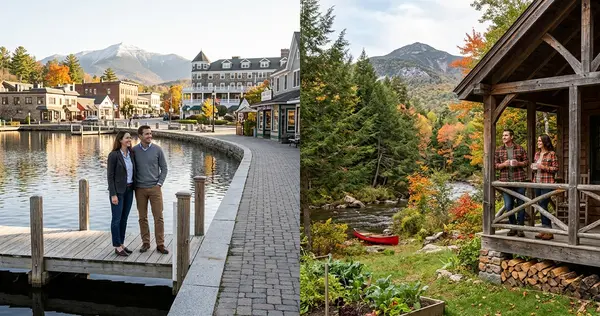
A year-round home in towns like Lake Placid, Saranac Lake, Wilmington, Keene, Tupper Lake, or Peru is the opposite: built and permitted for full-time occupancy, with reliable heat, plowed road access, and utilities you can count on in January. The lifestyle appeal of the region is the same either way, the Adirondacks offer world-class recreation year-round, but the ownership experience is not.
Seasonal Camp vs. Year-Round Home: The Core Differences
Here's a side-by-side look at how the two compare on the factors that matter most to buyers.
|
Factor |
Seasonal Camp |
Year-Round Home |
|
Typical use |
Getaway, weekends, summer/fall season |
Primary residence or full-time second home |
|
Winter access |
Often limited or unplowed |
Plowed, reliable |
|
Utilities |
Seasonal water, well/septic, sometimes off-grid |
Full four-season systems |
|
Purchase price |
Frequently lower entry point |
Higher, reflects year-round usability |
|
Financing |
Can be harder; more cash deals |
Standard mortgage options |
|
Insurance |
Higher scrutiny; vacancy considerations |
Standard homeowner policies |
|
Ongoing effort |
Opening/closing each season |
Steady, but no seasonal shutdown |
Neither column is "better." The right answer depends entirely on how you plan to use the property, how often you'll be there, and what role it plays in your financial picture.
Financing Differences You Need to Understand
This is where the camp-versus-home distinction gets real. A year-round home in the Champlain Valley generally qualifies for the same mortgage products as any conventional purchase. A seasonal camp is a different animal.
Lenders evaluate whether a property is habitable year-round, and a camp that lacks a permanent heat source, a full foundation, or reliable winter access can be harder to finance with a conventional loan. Some buyers end up paying cash, using a portfolio loan, or financing through the appraisal-dependent quirks of rural lending. It's smart to understand how second homes and investment properties are treated before you fall in love with a listing, the guidelines Investopedia publishes on are a useful starting point; the difference between a second home and an investment property can save you from an unpleasant rate surprise.
One home buying tip our team gives every camp shopper: talk to a lender about the specific property early, not just the price range. A camp priced attractively can still be difficult to finance, and that reality should shape your budget and your offer strategy from day one.
Ongoing Costs Beyond the Purchase Price
A lower sticker price on a seasonal camp doesn't always mean lower total cost of ownership. Factor in:
- Winterizing and de-winterizing, draining lines, shutting down and reopening the water system, and protecting against freeze damage each year.
- Private road maintenance, many camps sit on shared or seasonal roads where owners split plowing, grading, and upkeep.
- Insurance, insurers often scrutinize seasonal and vacant properties more closely, which can affect both premiums and coverage.
- Access logistics, if the road isn't plowed, even a quick winter visit becomes a project.
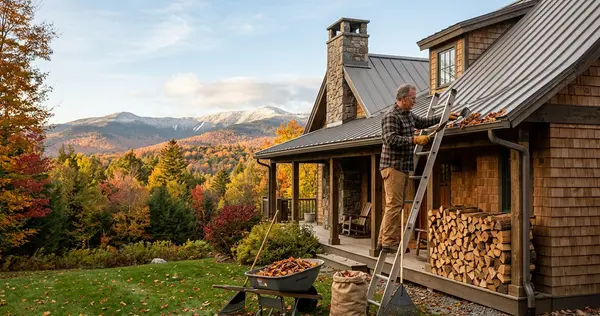
A year-round home carries steadier, more predictable costs. There's no seasonal shutdown, but you're also paying to heat and maintain a full-time residence twelve months a year. Run the real annual number for both scenarios before you decide which fits your life and your budget.
The Investment Angle
If you're weighing this purchase as an investment, the calculus shifts. Here's the investment advice we'd offer a buyer thinking beyond personal use.
Waterfront and near-water camps in the Adirondack Park have historically held value well because supply is genuinely fixed, the Park's protections mean no one is manufacturing new lakefront. That scarcity is a real long-term tailwind. A year-round home, meanwhile, serves a broader buyer pool at resale because it isn't limited to seasonal use, which can make it easier to sell when the time comes.
Rental income is where many buyers get excited, and where the rules matter. Short-term rental regulations vary sharply by town, and they can make or break your numbers. In the Village of Saranac Lake, for example, short-term rentals require a permit; review the current Saranac Lake short-term rental law before you count on rental income there. Always confirm the specific municipality's rules before you buy. For a national baseline on how buyers are actually using vacation and investment properties, the National Association of REALTORS® research on second homes is worth a look.
A quick note: our brokerage helps you buy and sell property. We don't manage rentals, so treat rental projections as due diligence you'll want to verify with the relevant town and your own advisors, not as a service we provide.
Reading the Market Before You Commit
Market trends in the Adirondack–Champlain Valley region behave differently than in a typical suburban market, and understanding that rhythm is half the battle.
Inventory here is seasonal. Camp and waterfront listings tend to surface in spring and summer, when the properties show best and sellers are active. That means the widest selection often coincides with the most competition. Year-round homes in Essex, Franklin, and Clinton counties list throughout the year, but winter can quietly favor a prepared buyer, fewer competing offers, more motivated sellers.
National tools like Realtor.com's local market data and Redfin's market insights give you a broad sense of pricing and demand trends, but they can't capture the hyper-local reality of a specific lake, road, or hamlet. That's where local expertise earns its keep. The recreational appeal that drives demand, trails, paddling, and public land access documented on the New York State DEC's places to go pages, is also part of what supports value across the region.
How to Decide: A Quick Checklist
Run your situation through these questions. Your answers usually point clearly toward one option or the other.
- How many days a year will you realistically be there? Fewer than 60 or so leans camp; full-time or near-full-time leans year-round home.
- Do you need winter access? If a plowed road and reliable heat are non-negotiable, you want a year-round home.
- How are you paying? If you need conventional financing, a year-round home is generally the smoother path.
- What's your resale horizon? Planning to sell within a few years? A four-season home usually appeals to a larger buyer pool.
- Is rental income part of the plan? If so, confirm the town's rules before you make an offer, not after.
There's no universally right answer, only the right answer for your goals, your budget, and how you actually want to spend your time in the Adirondacks.
Frequently Asked Questions
Can you convert a seasonal camp into a year-round home? Sometimes, but it's rarely as simple as it sounds. Converting a camp usually means adding insulation, a permanent heat source, four-season plumbing, and possibly upgrading well, septic, or road access, and it may require permits. Get contractor estimates and confirm local requirements before you buy on the assumption that you'll convert.
Is a seasonal camp a good investment in the Adirondacks? It can be, particularly waterfront and near-water properties, because supply within the Adirondack Park is permanently limited. Just weigh the harder financing, seasonal carrying costs, and town-specific rental rules against the appreciation potential before you treat it as a pure investment.
Which holds its value better, a camp or a year-round home? Both can appreciate. Waterfront camps benefit from fixed supply, while year-round homes appeal to a broader resale market because they aren't limited to seasonal use. The better performer depends on the specific property, location, and how well it's maintained.
Ready to Explore Your Options in the Adirondacks?
The choice between a seasonal camp and a year-round home comes down to how you'll use it, how you'll pay for it, and what you want it to do for you over the long run. You don't have to figure that out alone.
Whether you're leaning toward a lakefront camp for summer weekends or a four-season home in Lake Placid, Saranac Lake, or the wider Champlain Valley, our team can walk you through current listings, break down the real costs, and help you buy with confidence. Explore available listings and start the conversation at tinaleonardrealestate.com, or reach out for personalized advice tailored to your goals
Categories
Recent Posts





"My job is to find and attract mastery-based agents to the office, protect the culture, and make sure everyone is happy! "