
What Separates Profitable Airbnb Properties From the Rest
What Separates Profitable Airbnb Properties From the Rest
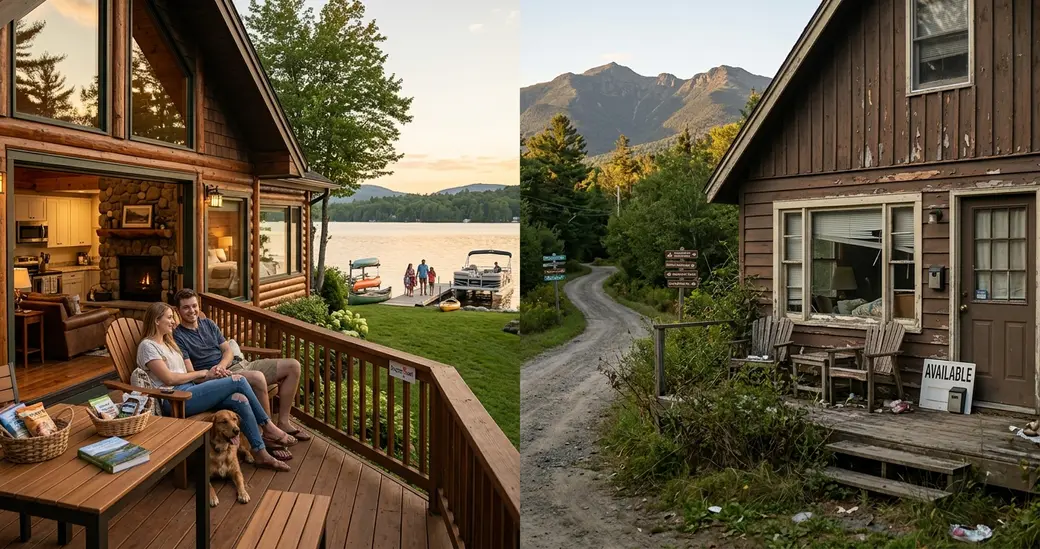
What separates profitable Airbnb properties from the rest? Profitable short-term rentals in the Adirondack–Champlain Valley win on location, honest underwriting, and local regulatory compliance, not just a high nightly rate. The best-performing properties are chosen with the same discipline as any serious investment.
Drive through Lake Placid, Saranac Lake, or Wilmington in peak season and you'll see the appeal instantly: full parking lots, booked-out cabins, and a steady stream of visitors chasing the High Peaks. It's tempting to assume any property with a mountain view or lake access will print money on Airbnb. The reality is more sobering. Within the same ZIP code, one short-term rental can gross six figures a year while a nearly identical home two streets over barely covers its carrying costs.
The difference is rarely luck. Profitable Airbnb properties share a set of characteristics that owners either engineer on purpose or stumble into by accident. If you're weighing a short-term rental purchase anywhere in Essex, Clinton, or Franklin County, understanding those characteristics is the single most valuable piece of investment advice you can act on before you make an offer. Below, we break down what actually separates the winners from the rest.
Start With the Numbers, Not the Nightly Rate
The most common mistake new investors make is falling in love with a headline nightly rate. A cabin advertising $450 a night sounds incredible until you realize it only books 40 nights a year. Revenue is a function of two levers working together: average daily rate (ADR) and occupancy. A modest $220-a-night property that stays booked 65% of the year will out-earn a flashier listing that sits empty most weeks.
Before you get attached to any property, pull real performance data for comparable rentals in the specific town. Third-party analytics platforms like AirDNA track occupancy, seasonality, and revenue across active listings, which lets you sanity-check your assumptions against what the market is actually delivering. Watching these local market trends over a full 12-month cycle is far more instructive than a single peak-season snapshot.
Then subtract everything. Cleaning fees, platform commissions, utilities, insurance, maintenance, snow removal, and taxes all erode gross revenue. One of the most practical home buying tips for short-term rental investors is to build a conservative pro forma before you write an offer, not after you close and the surprises start arriving.
Location Still Decides Everything
In the Adirondacks, location isn't about a generic "good neighborhood." It's about proximity to the specific reasons people travel here. Profitable properties cluster around demand drivers: Whiteface Mountain and the Olympic venues near Lake Placid, the paddling and trail networks around Saranac Lake and Tupper Lake, waterfront on the region's lakes, and quick access to the High Peaks trailheads out of Keene and Keene Valley.
A property's walkability to a village center matters too. Guests increasingly want to park once and stroll to restaurants, breweries, and shops. Resources like adirondack.net are useful for understanding which attractions draw visitors to each community, and by extension where demand concentrates. When you're evaluating market trends, pay attention to where new lodging demand is emerging, not just where it has historically been strongest, since saturation in a hot market like Lake Placid can compress margins for newer entrants.
Know the Rules Before You Buy
This is where a lot of otherwise-promising deals fall apart. Across the Adirondack–Champlain Valley, short-term rental regulation has tightened considerably, and the rules vary from one municipality to the next. A property that pencils out beautifully on paper is worthless as an Airbnb if it can't be legally permitted.
In the Lake Placid area, short-term rentals are governed at the town level. The Town of North Elba administers permitting and occupancy requirements that directly affect what and how you can rent. In the Village of Saranac Lake, short-term rentals are regulated under a dedicated local law with its own permit process and standards. (Short-term rental disclosure: rentals in the Village of Saranac Lake are subject to the Saranac Lake Short-Term Rental Law; confirm current requirements with the municipality before purchasing or operating.)
The takeaway is simple but non-negotiable: verify permitting eligibility for the exact address, in the exact municipality, before you buy. Zoning district, primary-residence requirements, permit caps, and occupancy limits can all make or break the investment. This is one area where sound investment advice and basic due diligence are the same thing.
Underwrite Like an Investor, Not a Dreamer
Once a property clears the location and regulatory tests, treat the purchase like the business decision it is. National research organizations like the National Association of Realtors publish investment and housing data that can help frame reasonable return expectations, but your underwriting has to be hyper-local to be useful.
Build your model around a few hard categories:
- Financing costs. Investment-property mortgages typically carry higher rates and larger down-payment requirements than a primary residence.
- Taxes and insurance. Short-term rental use often changes both your property tax picture and your insurance needs; a standard homeowner's policy usually won't cover commercial rental activity.
- Operating expenses. Turnover cleaning, restocking, repairs, landscaping, and Adirondack-specific costs like plowing and firewood add up fast.
- Income taxes. How the IRS treats your rental income depends on usage and days rented. The IRS guidance on renting residential and vacation property is a useful starting point, and a qualified tax professional should review your specific situation.
None of this is glamorous, but disciplined underwriting is precisely what separates a profitable property from a money pit. Note that this article is educational and not a substitute for personalized legal, tax, or financial advice.
The Guest Experience Is the Product
Two cabins on the same road, with the same nightly rate, can post wildly different revenue, and the gap almost always traces back to the guest experience. In a competitive market, reviews are the currency. A property that consistently earns five stars climbs the search rankings, commands premium pricing, and books further in advance.
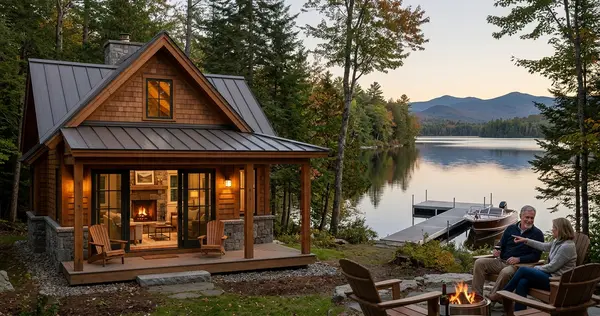
What earns those reviews? Thoughtful design that photographs well, genuinely comfortable beds, fast Wi-Fi (a real need for remote workers escaping to the mountains), a fully equipped kitchen, and clear, warm communication. In the Adirondacks specifically, the amenities guests remember are the ones that fit the setting: a wood stove or fireplace, a hot tub with a view, kayaks or snowshoes on-site, and a fire pit. These features aren't just nice touches, they're pricing power.
Play the Seasons Deliberately
The Adirondack–Champlain Valley is a two-peak market. Summer brings hikers, paddlers, and lake lovers; winter brings skiers heading to Whiteface and visitors drawn to Lake Placid's Olympic legacy. The most profitable properties are built to capture both seasons and to soften the shoulder-season dips in spring and late fall.
Smart operators adjust pricing dynamically, lean into holiday and event weekends, and market amenities that extend the calendar, cozy winter features that fill December through March, and outdoor gear that captures the summer rush. Properties that only work three months a year are far harder to make profitable than those with year-round appeal across communities from Jay and Wilmington to Peru and Bloomingdale.
Frequently Asked Questions
Are Airbnbs still a good investment in the Adirondacks? They can be, but the margin for error has narrowed. Success now depends heavily on choosing a property in a strong location that is fully permissible under local short-term rental rules, then underwriting it conservatively. Blanket assumptions about easy profits no longer hold in more saturated markets like Lake Placid.
How much can a short-term rental earn in Lake Placid or Saranac Lake? Earnings vary widely by property size, location, amenities, and how many nights it books across both peak seasons. Rather than relying on a single figure, pull comparable-property data for the exact town and property type, and model a full 12-month cycle including the slower shoulder seasons.
Do I need a permit to run an Airbnb in the Adirondacks? In most Adirondack–Champlain Valley municipalities, yes. Requirements differ by town and village, Lake Placid (Town of North Elba) and the Village of Saranac Lake each have their own rules. Always confirm permitting eligibility for the specific address before purchasing.
Ready to Find a Short-Term Rental That Actually Performs?
The properties that succeed as short-term rentals are chosen carefully, for location, for regulatory eligibility, and for numbers that hold up under honest scrutiny. That's exactly the kind of due diligence the right local guidance makes easier.
Tina Leonard Real Estate knows the Adirondack–Champlain Valley market from Lake Placid and Saranac Lake to Wilmington, Keene, Tupper Lake, and the Champlain Valley communities of Clinton, Essex, and Franklin Counties. If you're exploring an investment property purchase, browse current listings and connect with our team at tinaleonardrealestate.com for local market insight tailored to your goals.
Categories
Recent Posts






"My job is to find and attract mastery-based agents to the office, protect the culture, and make sure everyone is happy! "