Easements, Access, and Boundaries: What Adirondack Land and Home Buyers Need to Know
Easements, Access, and Boundaries: What Adirondack Land and Home Buyers Need to Know
Why do easements, access, and boundaries matter so much in the Adirondacks? Because in a rural region of large parcels, private roads, and old deeds, how you legally reach a property and exactly what you own are not guaranteed by the listing. A parcel can be landlocked, cross a neighbor's right-of-way, carry easements that limit what you can build, or have boundaries that don't match the fence line. Confirming access, easements, and boundaries before you buy is some of the most important due diligence you'll do.
In a dense suburb, access and boundaries are usually straightforward, the house fronts a public road and the lot lines are well recorded. In the Adirondacks, none of that can be assumed. Properties here are often reached by private or shared roads, described in deeds written generations ago, and bordered by thousands of acres of forest where a surveyed line and the "obvious" boundary are two different things. Add conservation easements and waterfront rights to the mix, and the legal picture behind a beautiful property can be surprisingly complex.
This guide walks through what buyers of Adirondack land and homes need to understand about access, easements, and boundaries, the quiet details that determine whether a dream property is truly what it appears to be. Consider these the home buying tips that protect you from the most expensive surprises in rural real estate.
Access: Can You Legally Get There?
The first question for any rural property is deceptively simple: how do you legally reach it? The answer is not always the driveway you see.
- Public vs. private road frontage. A home on a town-maintained public road is the simplest case. Many Adirondack properties, though, are reached by private or shared roads, which raises questions of who owns the road, who may use it, and who maintains and plows it.
- Deeded access vs. permission. If a property is reached across land someone else owns, you need legally deeded access (a recorded right-of-way), not just a neighbor's goodwill. Permission can be revoked; a deeded easement runs with the land.
- Landlocked parcels. Some parcels, especially raw land, have no legal road access at all. A landlocked property can be very difficult to use, build on, or finance, so confirming legal access is non-negotiable.
- Road maintenance agreements. On a shared private road, find out whether there's a written maintenance agreement covering upkeep, plowing, and cost-sharing, so you know your obligations before you buy.
This is exactly the groundwork we stress in buying land in the Adirondacks: read this before you make an offer and the 12 questions most land buyers forget to ask.
Easements: Rights Across the Land
An easement is a legal right for someone to use part of a property for a specific purpose, and they're common in the Adirondacks. Some benefit you; some limit you. The main types to understand:
- Right-of-way easements. These let someone cross the land, for example, a neighbor's access to their own parcel, or your access across someone else's. Know which easements burden the property and which benefit it.
- Utility easements. Power, phone, or other utilities may have the right to run lines and access equipment across part of the property.
- Conservation easements. These are a defining feature of the Adirondacks. A conservation easement permanently restricts certain development or uses to protect the land, and many parcels here are affected. If a property carries one, understand exactly what it does and doesn't allow before you count on building, subdividing, or clearing.
Easements don't necessarily make a property a bad buy, but you must know they exist and what they permit. A right-of-way across your future backyard, or a conservation easement that blocks the addition you were planning, is the kind of thing to discover before closing, not after.
Boundaries and Surveys: Know What You Actually Own
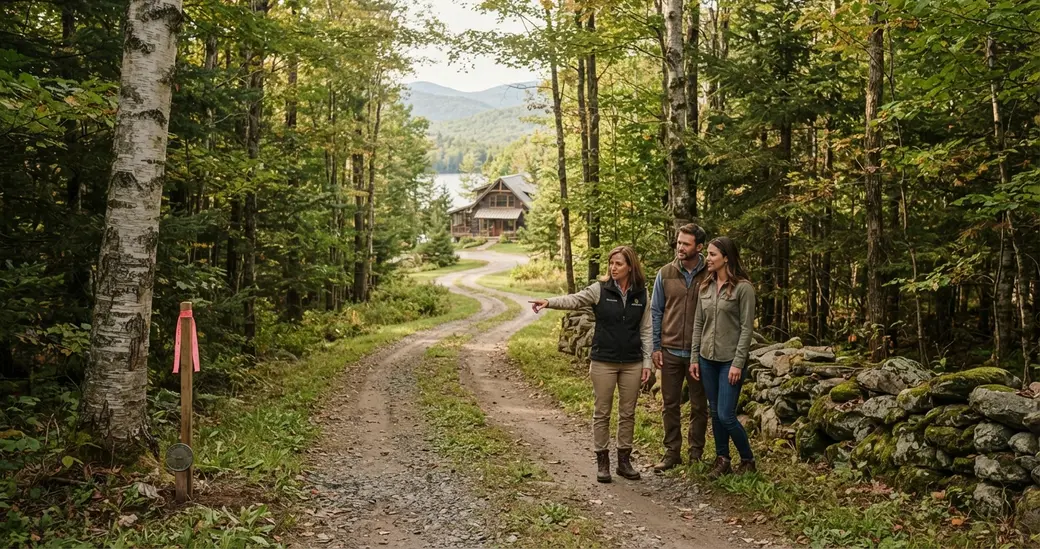
In forested, large-parcel country, boundaries are a frequent source of surprises. Old deeds may describe a property in vague or antiquated terms, fences and stone walls may not match the legal lines, and decades of informal use can blur where one parcel ends and the next begins.
A current survey is the best protection. It establishes the actual boundaries, reveals encroachments (a neighbor's shed, driveway, or fence over the line), and confirms the acreage you're paying for. On rural land especially, the difference between what a seller believes they own and what the survey shows can be significant. Skipping this step is one of the classic errors we flag in the biggest mistakes first-time Adirondack land buyers make, and it's the kind of due diligence that prevents the unwelcome surprises in the biggest closing-day surprises and how to avoid them.
Waterfront Adds Another Layer
If the property touches a lake, pond, or river, boundaries and rights get more nuanced still. Shoreline ownership, where exactly your line meets the water, and your rights to build a dock or boathouse all depend on the deed and on regulations. Docks, boathouses, and shoreline work can also fall under Adirondack Park Agency and New York State environmental rules, so what you're allowed to do at the water's edge isn't automatic.
Before you pay a waterfront premium, confirm exactly what shoreline you own and what you can do with it. Our guide to what sellers won't tell you about waterfront living covers the realities that listing photos leave out, and the principle is the same: verify the rights, not just the view.
Title, Professionals, and Protecting Yourself
The good news is that these risks are manageable with the right team and steps:
- Order a title search. A title company or real estate attorney researches the property's history to surface recorded easements, rights-of-way, liens, and access issues.
- Get title insurance. It protects you against certain title defects that a search might miss, cheap peace of mind on a major purchase.
- Commission a survey. Especially on land and rural homes, a current survey confirms boundaries, acreage, and encroachments.
- Work with a local real estate attorney. New York real estate transactions typically involve attorneys, and a local one who knows Adirondack quirks is invaluable. We're a brokerage, not a law firm, so lean on qualified professionals for the legal review.
- Build it into your contingencies. Make your offer contingent on satisfactory title, access, and survey results so you can act on what you find.
Doing this homework is how buyers avoid the kind of regret we explore in why some buyers regret purchasing remote mountain property. Sound investment advice in rural real estate always starts with confirming access, rights, and boundaries before the money moves.
How to Protect Yourself: A Quick Checklist
- Confirm legal access. Public road frontage or a recorded, deeded right-of-way, never just permission.
- Identify every easement. Know which burden the property and which benefit it, and read any conservation easement closely.
- Get a current survey. Verify boundaries, acreage, and encroachments, especially on land.
- Verify waterfront rights. Confirm shoreline ownership and what you can build before paying a premium.
- Use title search, title insurance, and a local attorney, and make your offer contingent on clean results.
Work through those five and you'll know exactly what you're buying, and exactly how you'll use and reach it.
Frequently Asked Questions
What does it mean if a property is landlocked? A landlocked parcel has no legal road access, it's surrounded by land owned by others without a recorded right-of-way to reach it. That can make the property very hard to build on, use, or finance. Always confirm legal, deeded access before buying rural Adirondack land, rather than assuming an existing driveway or trail grants it.
Are conservation easements common in the Adirondacks, and do they affect me? Yes, conservation easements are a notable feature of the region, and they permanently restrict certain development or uses on affected parcels to protect the land. If a property you're considering carries one, review exactly what it allows and prohibits before counting on building, clearing, or subdividing, it can significantly shape what you're able to do.
Do I really need a survey if the seller shows me the boundaries? In rural, forested country, yes, it's strongly advisable. Old deeds, mismatched fence lines, and informal use often blur true boundaries, and a current survey confirms acreage, reveals encroachments, and shows exactly what you're buying. The cost is small next to the risk of a boundary or access dispute after closing.
Buy With Your Eyes Open
An Adirondack property is more than the house or the view, it's the access that gets you there, the rights that come with it, and the boundaries that define it. Those details don't show up in a listing photo, but they determine what you can truly do with the land for years to come. Confirm them up front, with the right professionals, and you turn hidden risk into informed confidence.
The team at Tina Leonard Real Estate knows the access, easement, and boundary quirks of rural Adirondack property, and we help buyers ask the right questions and line up the right experts before they commit. Browse current listings, check the Market Snapshot, or reach out to evaluate a specific property with clear eyes.
Categories
Recent Posts



OUR MISSION
We're proud to be part of the following global networks of distinguished brokerage companies: