
Why Some Buyers Regret Purchasing Remote Mountain Property (And How You Can Avoid It)

Why Some Buyers Regret Purchasing Remote Mountain Property (And How You Can Avoid It)
There's a moment almost every mountain property buyer experiences. You're standing on a ridgeline or at the edge of a quiet pond, the air smells like balsam, and you think: I could live here. It's a powerful feeling, and in the Adirondacks, it's an easy one to have. But seasoned agents will tell you that the buyers who end up happiest five years later are the ones who paired that feeling with a clear-eyed look at what remote ownership actually involves.
This isn't an article designed to talk you out of buying mountain property. Quite the opposite. It's a collection of practical home buying tips drawn from the most common regrets we hear, so you can walk into your purchase informed, prepared, and confident. Whether you're shopping for a year-round residence, a seasonal camp, or a long-term investment, understanding where other buyers stumbled is some of the best investment advice you'll ever get for free.
Regret #1: Underestimating the True Cost of Access
The single most common regret among remote property owners has nothing to do with the house itself. It's the road.
A half-mile private drive looks charming in July. In January, when the Adirondacks can see several feet of snowfall in a single storm cycle, that same drive becomes a recurring expense and a logistical commitment. Plowing contracts for long private roads can run into the thousands per season, and in mud season, late March through early May in much of the North Country, unpaved access roads can become genuinely impassable without proper grading and drainage.
Actionable tip: Before making an offer, ask three specific questions. Who legally maintains the road? Is there a recorded road maintenance agreement if the road is shared? And what does year-round maintenance actually cost? If the seller can't answer the third question with real numbers, talk to neighbors who can.
Regret #2: Discovering Connectivity Limits After Closing
Remote work has reshaped market trends across rural America, and the Adirondacks have benefited enormously from buyers who can live anywhere their laptop works. The problem? Some buyers assume connectivity and discover otherwise after the ink dries.
Cell coverage in mountainous terrain is highly variable, two properties a mile apart can have completely different service. Broadband availability follows similar patterns. Before you fall in love with a property, check the FCC's National Broadband Map to see what providers actually report serving that address, and then verify on site. Stand in the kitchen. Stand in the spot where your desk would go. Make a call.
Satellite internet has improved dramatically and works for many remote owners, but it carries its own costs and weather sensitivities. If your livelihood depends on a stable connection, treat connectivity as a contingency, not an afterthought.
Regret #3: Misjudging Maintenance in a Four-Season Climate
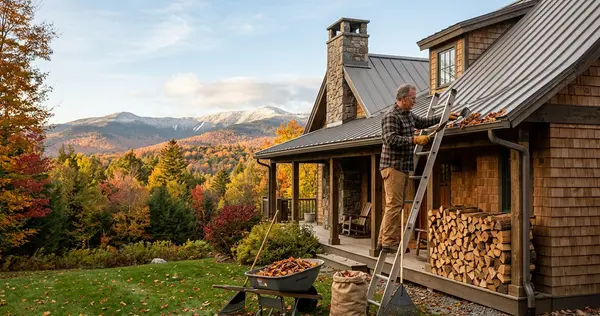
Mountain homes work harder than suburban homes. Freeze-thaw cycles stress foundations, roofs carry significant snow loads, and humidity swings affect everything from log siding to well pumps. Buyers coming from milder climates frequently underestimate annual upkeep, and the regret compounds when the property is two hours from their primary residence and they can't easily check on it.
The U.S. Department of Energy notes that proper insulation and air sealing are among the highest-return improvements for homes in cold climates, and that's doubly true at elevation. A pre-purchase inspection by someone experienced with North Country construction, not just a generalist, is worth every penny. For background on weatherization and efficiency standards, the Department of Energy maintains excellent homeowner resources.
Actionable tip: Budget 1–2% of the home's value annually for maintenance, and skew toward the higher end for older camps, waterfront structures, and seasonal homes that sit empty through winter. If you won't be on site regularly, price in a caretaker or property watch service before you buy, not after the first frozen pipe.
Regret #4: Not Understanding Land-Use Rules Before Buying
Here's something unique to our region: roughly half of the six-million-acre Adirondack Park is privately owned, but development on private land within the Blue Line is overseen by the Adirondack Park Agency. Land-use classifications determine what you can build, how you can subdivide, and what permits you'll need for everything from a guest cabin to a new driveway cut.
Buyers who skip this homework sometimes purchase acreage with grand plans, only to learn their parcel's classification limits exactly the project they had in mind. Similarly, shoreline properties carry setback and cutting restrictions designed to protect water quality, and the New York State Department of Environmental Conservation regulates activities like dock construction and timber harvesting.
None of this should scare you off. These protections are precisely why Adirondack property holds its character, and its value. But "I didn't know I needed a permit for that" is a regret that's entirely avoidable with an hour of due diligence and an agent who knows the territory.
Regret #5: Ignoring Water, Septic, and Natural Hazard Realities
Most remote mountain properties rely on private wells and septic systems. Both are perfectly manageable, millions of rural homeowners live happily with them, but they require testing before purchase and maintenance after. A failed septic system can cost $15,000–$30,000 or more to replace, and replacement options on small or steep lots can be limited.
Water comes with another consideration: flooding. Mountain valleys and streamside parcels can carry flood risk that isn't obvious on a sunny showing day. Check the property against FEMA's flood maps and ask whether the home has any history of water events. Flood insurance, where needed, should be factored into your carrying costs from day one.
Actionable tip: Make well flow testing, water quality testing, and septic inspection standard contingencies in any offer on rural property. A few hundred dollars in testing can prevent five figures in surprises.
Regret #6: Buying on Emotion Without an Exit Strategy
This is where investment advice and lifestyle decisions intersect. Remote properties are, by definition, a thinner market than village homes. The buyer pool for a stunning but isolated parcel is smaller, and days-on-market figures tend to run longer. According to research from the National Association of Realtors, buyer preferences and market trends shift with economic cycles, and rural and vacation markets can swing more sharply than primary-residence markets in both directions.
That cuts two ways. The Adirondacks saw remarkable appreciation as remote work expanded, and well-located mountain properties have rewarded patient owners handsomely. But if you may need to sell within a few years, factor in a longer marketing timeline and the carrying costs that come with it. National listing data on sites like Realtor.com can help you benchmark how comparable rural properties are moving, though nothing replaces hyperlocal knowledge.
Actionable tip: Before you buy, write down your realistic ownership horizon. Under five years? Prioritize properties with broader resale appeal, reliable road access, good connectivity, proximity to a village like Lake Placid or Saranac Lake. Ten-plus years? You can afford to prioritize seclusion and let the market come to you.
Regret #7: Overlooking Taxes and Carrying Costs
Property taxes in New York vary meaningfully by town and school district, and buyers relocating from out of state are sometimes surprised in either direction. Review the actual tax bill, not an estimate, and check eligibility for programs like the STAR exemption through the New York State Department of Taxation and Finance if the home will be your primary residence. Add insurance (including any flood or wood-stove considerations), road maintenance, utilities, and that 1–2% maintenance reserve, and you'll have an honest picture of what ownership costs annually. The Consumer Financial Protection Bureau offers free worksheets for budgeting the full cost of homeownership beyond the mortgage payment.
The Good News: Every One of These Regrets Is Preventable
Notice a pattern? Not one of these regrets is about the mountains themselves. Nobody regrets the loons at dawn, the October ridgelines, or the silence. The regrets are all about information, things buyers didn't know to ask, costs they didn't anticipate, rules they didn't research. With the right home buying tips, the right inspections, and the right local guidance, remote mountain ownership delivers exactly what people dream it will.
That's where working with a team that lives and breathes this region makes the difference. We know which roads get plowed and which don't, which towns have municipal broadband initiatives, and which ponds freeze solid enough for a January skate.
Ready to Buy Mountain Property the Right Way?
If the Adirondacks are calling, answer with confidence. Explore our current listings to see what's available right now across Lake Placid, Saranac Lake, Tupper Lake, and the surrounding High Peaks communities, from turnkey village homes to genuinely off-grid retreats. Want market trends and new listings delivered straight to your inbox? Subscribe to our newsletter. And if you'd rather talk through your specific situation, budget, timeline, must-haves, and deal-breakers, reach out to Tina Leonard Real Estate for a no-pressure consultation. We'll help you find the mountain property you'll never regret.
Categories
Recent Posts



"My job is to find and attract mastery-based agents to the office, protect the culture, and make sure everyone is happy! "