
Why So Many People Are Leaving Cities for the Adirondacks

Why So Many People Are Leaving Cities for the Adirondacks
There's a quiet revolution happening across upstate New York. Weekend getaways have turned into one-way moves. Rental inquiries have become purchase offers. And the communities nestled within the six-million-acre Adirondack Park are welcoming a new wave of residents who've decided that life in the mountains beats life in the metro, for good.
If you've been curious about this trend, whether you're a city dweller contemplating a change, a real estate investor tracking market opportunities, or simply someone watching the landscape shift, this post is for you. We're breaking down the forces fueling the Adirondack migration, what it means for local real estate, and how you can make the most of what may be one of the most compelling real estate opportunities in the Northeast. To explore current Adirondack listings and connect with a local specialist, visit Tina Leonard Real Estate.
The Post-Pandemic Reset That Never Reversed
The COVID-19 pandemic reshaped how millions of Americans think about where, and how, they live. Remote work unlocked geographic freedom for a generation of professionals who had previously been tethered to urban centers. And while many cities have rebounded, the Adirondack region never lost the residents it gained during those early years of mass migration.
According to data from the U.S. Census Bureau, counties across northern New York saw measurable population gains between 2020 and 2023, bucking the trend of rural decline that had characterized the region for decades. Essex, Hamilton, and Franklin counties, all within or adjacent to the Blue Line of Adirondack Park, reported increased housing demand, reduced vacancy rates, and rising median home prices.
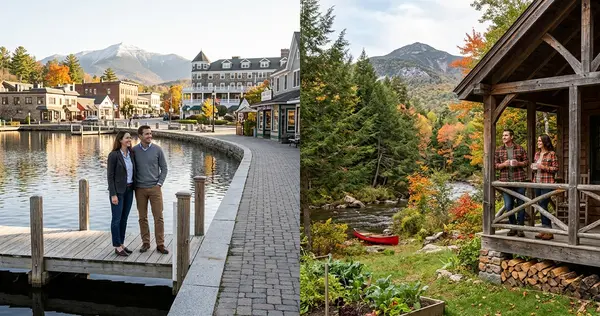
What started as a flight to safety became something more intentional: a recalibration of values. People realized they could maintain their careers while trading a studio apartment in Brooklyn or a condo in Boston for a three-bedroom home on a lake in Lake Placid, Saranac Lake, or Tupper Lake. The math made sense. The lifestyle made even more sense. The Adirondack Almanack, one of the region's most trusted independent news sources, has documented this demographic shift extensively, and the stories it tells are consistent: people arrive for a weekend and start looking for a forever home.
Home Buying Tips for the Adirondack Market
Before we dig into market trends, let's talk about what every prospective buyer needs to know going in. The Adirondack real estate market operates differently than urban markets, and understanding its nuances can save you time, money, and frustration. The U.S. Department of Housing and Urban Development's homebuying guide is a useful starting point for first-time buyers, but the Adirondack-specific considerations below are equally important.
Know the Park Regulations
The Adirondack Park Agency (APA) governs land use within the Blue Line, and those regulations significantly affect what you can build, renovate, or expand on any given parcel. Before falling in love with a property, confirm its land classification, whether it falls in a hamlet, moderate intensity, or resource management zone. These distinctions determine everything from the footprint of a new structure to whether you can add a dock to your lakefront lot.
A visit to the Adirondack Park Agency's official website is an essential early step in your due diligence process. Their interactive map viewer and permit lookup tools can clarify the regulatory picture before you make an offer.
Work with a Local Specialist
One of the most valuable home buying tips for this market is to prioritize local expertise over brand-name brokerages. Agents who live and work in the Adirondacks understand seasonal pricing cycles, which roads flood in spring, which lakes have public boat launches, and which municipalities have short-term rental restrictions that could affect your investment plans. National portals aggregate listings but they rarely capture the nuance that separates a good deal from a great one. The team at Tina Leonard Real Estate specializes in exactly this kind of on-the-ground Adirondack expertise, reach out to schedule a consultation before you start your search.
Understand Seasonal Dynamics
Adirondack real estate follows seasonal rhythms. Inventory typically tightens in late spring as buyers emerge ahead of summer. Properties that sit on the market through September often see reduced asking prices by October. If your timeline allows flexibility, autumn can be a strategically advantageous time to shop, competition is lower and sellers may be more motivated before winter sets in. Realtor.com's seasonal buying guides offer broader context on timing the market that applies well to resort-adjacent communities like the Adirondacks.
Budget for Rural Infrastructure
Many buyers from metropolitan areas underestimate the cost of maintaining a rural property. Well systems, septic tanks, fuel oil or propane heating, private road maintenance agreements, and the expense of reliable satellite or fiber internet service are all part of the ownership equation. Factor these into your carrying cost analysis before committing to a purchase price. The NYS Department of Environmental Conservation also provides guidance on water quality and environmental standards that are particularly relevant for properties with private wells or waterfront access.
Market Trends Shaping Adirondack Real Estate in 2026
Understanding current market trends is essential for anyone looking to buy or invest in this region. Here's what the data and on-the-ground activity are telling us.
Inventory Remains Compressed
Supply has struggled to keep pace with demand across the Adirondack region since 2020, and that dynamic has not dramatically reversed. Months of supply, the standard metric tracking how long it would take to sell all active listings at the current pace, has remained well below the six-month equilibrium threshold that typically signals a balanced market. This ongoing compression continues to put upward pressure on prices, particularly for lakefront and ski-adjacent properties.
The National Association of Realtors notes that housing inventory nationally remains constrained, and rural resort markets like the Adirondacks often experience even tighter conditions due to the finite nature of developable land within a protected park. For a real-time view of what's currently available in the Adirondack region, browse active listings on Tina Leonard Real Estate.
Median Prices Have Climbed Significantly
In communities like Lake Placid, median single-family home prices have more than doubled compared to pre-pandemic benchmarks. Entry-level properties, those in the $250,000–$350,000 range, that were once plentiful are now the exception rather than the rule. Move-up buyers from New York City and Boston continue to bring capital that competes aggressively for quality listings, particularly those with water access or ski proximity.
That said, pockets of relative value still exist. Interior towns without lakefront cachet, places like Newcomb, Indian Lake, and Long Lake, still offer more approachable price points for buyers willing to prioritize acreage and privacy over waterfront prestige. The Lake Placid Convention and Visitors Bureau provides useful context on the broader regional economy and quality of life that helps buyers understand what drives value in specific communities.
Short-Term Rentals Are a Double-Edged Sword
The Airbnb and VRBO economy has had a pronounced effect on Adirondack real estate. For investors, short-term rental income has made the numbers work in ways that traditional long-term rentals never could. A well-positioned property on a sought-after lake can generate meaningful seasonal income that offsets or exceeds carrying costs. Adirondack.net, the region's comprehensive tourism and travel resource, gives a clear picture of the year-round visitor demand that supports this rental market.
However, a growing number of municipalities within the Park are revisiting their short-term rental regulations. Some have implemented permit caps, noise ordinances, and occupancy restrictions in response to community concerns. If short-term rental income is a core component of your investment thesis, verify current local ordinances before purchasing, and monitor proposed regulatory changes closely.
Infrastructure Investment is a Tailwind
The expansion of broadband internet infrastructure across rural New York, supported in part by federal funding through programs like the USDA ReConnect Program, has meaningfully expanded the pool of locations viable for full-time remote workers. Communities that struggled with connectivity as recently as five years ago now have access to fiber or reliable fixed wireless service, opening the door to year-round residency that was previously impractical.
This connectivity investment functions as a structural tailwind for long-term property values in the region. As more workers gain the flexibility to live anywhere, an area that was once a weekend destination becomes a legitimate primary residence market.
Investment Advice: Is Adirondack Real Estate Right for Your Portfolio?
The Adirondacks represent a compelling, but specialized, investment opportunity. Here's how to think through it with clear eyes. If you're new to real estate investing, Investopedia's real estate investing overview provides a solid foundation before you evaluate any specific market.
The Case for Investing
Scarcity of Supply: The Adirondack Park is constitutionally protected as "forever wild" in the New York State Constitution. That protection means the supply of developable land is, by design, finite. In real estate, scarcity has historically supported long-term value appreciation.
Demand Diversity: Adirondack properties attract multiple demand streams simultaneously, primary residents, second-home buyers, short-term rental investors, and seasonal retreat seekers. This diversity of demand reduces the risk of any single market segment cooling.
Quality of Life Premium: Buyers and renters are increasingly willing to pay a premium for clean air, natural beauty, outdoor recreation access, and reduced density. These intangible quality-of-life factors are difficult to replicate and continue to attract affluent households from major metropolitan areas.
Long-Term Demographic Shift: The preferences of Millennial and Gen Z buyers, who are now entering their prime homebuying years, skew toward experience and authenticity over urban prestige. The Adirondacks, with their hiking, paddling, skiing, and community character, align well with those values. Research from the National Association of Realtors on generational homebuying trends consistently supports this shift.
The Risks to Consider
No investment is without risk, and responsible investment advice requires honest engagement with the downside scenarios.
Regulatory Complexity: APA regulations add a layer of complexity to development, renovation, and short-term rental strategies. Missteps can be expensive and time-consuming to resolve.
Seasonality Risk: Properties that depend heavily on summer or ski-season income face revenue concentration risk. A poor snow year or an unusually rainy summer can materially affect rental performance.
Liquidity: Rural real estate is inherently less liquid than urban or suburban markets. Selling timelines can be longer, and buyer pools, while active, are smaller than in major metropolitan markets. Understanding concepts like cap rate and cash-on-cash return will help you evaluate whether a specific property's income potential justifies its price and carrying costs.
Climate Sensitivity: Ice fishing, snowmobiling, and skiing are culturally central to Adirondack winter tourism. Climate variability poses a long-term risk to snow-dependent activities, which in turn could affect seasonal rental demand in certain property categories.
For the right investor, one with a long time horizon, a tolerance for regulatory complexity, and a genuine appreciation for what the Adirondacks offer, the risk-reward profile is attractive. For those seeking quick flips or purely passive income with minimal management, the market demands a closer look before committing. Contact the Tina Leonard Real Estate team for a personalized investment assessment tailored to your goals.
The Lifestyle Pull: What the Numbers Don't Capture
Real estate market trends and investment advice are important, but they only tell part of the story. Talk to anyone who has made the move from a city to the Adirondacks, and the conversation quickly shifts from spreadsheets to something harder to quantify.
People talk about their children growing up swimming in clear lakes instead of navigating crowded playgrounds. They talk about a pace of life that actually allows for connection, with neighbors, with nature, and with themselves. They talk about the particular quality of silence that descends after a fresh snowfall, or the way the light hits the High Peaks on a clear October morning. Spend a few minutes on Adirondack.net's community and living section and you'll find no shortage of voices making the same case.
The Adirondack region has always offered these things. What's changed is that a growing number of people, freed by technology and motivated by a pandemic-era reevaluation of priorities, are willing to act on what they've long suspected: that a beautiful life is possible outside the urban core.
Communities like Saranac Lake have seen an infusion of young families, remote professionals, and entrepreneurs who are reinvesting in local schools, opening new businesses, and contributing to a cultural vibrancy that complements the natural environment. This human capital investment is itself a market trend worth watching, places that attract talented, motivated residents tend to appreciate in value over time in ways that quantitative models don't always predict.
Practical Next Steps for Serious Buyers
If you're genuinely considering a move to the Adirondacks, or an investment in Adirondack real estate, here's a practical framework to move from curiosity to conviction.
Step 1 — Visit in Multiple Seasons. A property that enchants in July may feel isolating in February. If you're considering year-round residency, spend time in the region across different seasons before committing. Lake Placid's official tourism site is a great resource for planning seasonal visits and understanding what each time of year offers.
Step 2 — Get Pre-Approved. Rural and vacation property lending has its own quirks. Some lenders apply additional scrutiny to properties with shared wells, private roads, or short-term rental histories. Get pre-approved with a lender experienced in these property types before you begin your search in earnest. The Consumer Financial Protection Bureau's mortgage guide walks through the pre-approval process clearly for buyers at any stage.
Step 3 — Define Your Use Case. Are you buying a primary residence, a second home, a short-term rental investment, or some combination? Clarity on your intended use will sharpen your search criteria and ensure that the regulatory picture aligns with your plans.
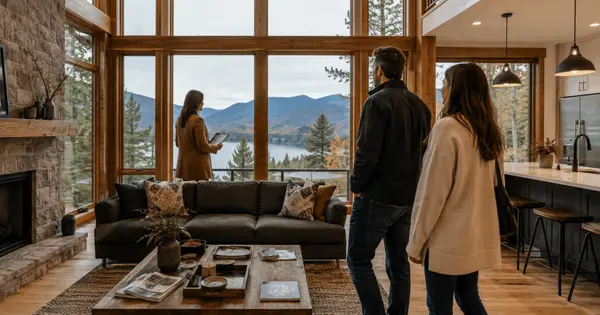
Step 4 — Engage a Local Agent Early. As noted above, the Adirondack market rewards local knowledge. An experienced local agent can alert you to off-market opportunities, flag regulatory concerns, and help you move quickly when the right property becomes available. Browse the Tina Leonard Real Estate team's current listings to see active opportunities across the region, and reach out directly to start the conversation.
Step 5 — Budget Conservatively. Between inspection costs (wells, septic, structural), closing costs, and the upfront investment often required to winterize or update a rural property, budget conservatively and maintain a reserve. The NYS Department of Environmental Conservation offers resources on environmental standards that can affect inspection scope for rural properties.
Ready to Make Your Move?
The Adirondack real estate market is active, competitive in the right segments, and full of opportunity for buyers and investors who approach it with the right preparation. Whether you're drawn by the lifestyle, the investment fundamentals, or both, the decisions you make now have the potential to shape your life, and your financial future, for decades to come.
Here's our call to action: Don't navigate this market alone.
- Explore our current Adirondack listings to see what's available across price points and property types, from lakefront estates to affordable year-round homes in welcoming communities.
- Schedule a complimentary consultation with one of our Adirondack real estate specialists. Whether you're six months away from a move or just beginning to explore your options, a conversation costs nothing and can save you from costly missteps.
The mountains are calling. We're here to help you answer.
The information provided in this blog post is intended for general informational purposes only and does not constitute financial, legal, or investment advice. Real estate market conditions change frequently; consult with a licensed real estate professional and appropriate legal and financial advisors before making any real estate investment decisions.
Categories
Recent Posts







"My job is to find and attract mastery-based agents to the office, protect the culture, and make sure everyone is happy! "