A Month-by-Month Home Maintenance Calendar for Adirondack Homeowners
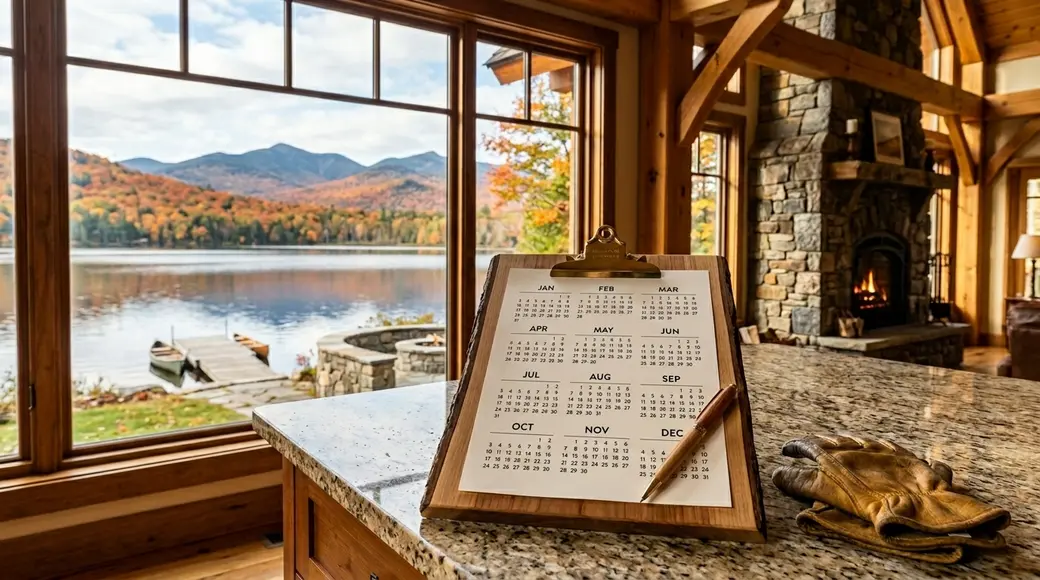
A Month-by-Month Home Maintenance Calendar for Adirondack Homeowners
What should Adirondack homeowners do to maintain their homes each month? Adirondack homeowners should follow a seasonal maintenance calendar, servicing heating systems and clearing snow loads in winter, inspecting roofs and testing wells in spring, sealing decks in summer, and winterizing pipes in fall, to protect their property and preserve its value.
Owning a home in the Adirondack–Champlain Valley is a genuine pleasure. It is also a year-round responsibility that looks nothing like homeownership in a milder climate. Deep frost, heavy snow loads, private wells and septic systems, wood and propane heat, and long stretches of cold all mean that a little routine care goes a long way, and that a skipped task in October can turn into an expensive emergency in January.
This maintenance calendar breaks the year into manageable monthly to-dos built specifically for North Country conditions. Whether you are a full-time resident in Saranac Lake, a weekend owner near Lake Placid, or a new buyer settling into your first camp on the water, treating your home to consistent upkeep is one of the smartest moves you can make. Think of it as the maintenance side of good investment advice: the cost of prevention is almost always a fraction of the cost of repair.
Why a Seasonal Calendar Matters in the Adirondacks
Homes here take a beating that homes downstate simply do not. Freeze-thaw cycles work at foundations and driveways. Snow accumulates on roofs and decks. Ice dams form along eaves. Wells, septic tanks, and heating fuel all demand attention that municipal-water, natural-gas suburbs never think about.
A predictable rhythm of care protects three things at once: your comfort, your safety, and your equity. Deferred maintenance is one of the fastest ways to erode a property's worth, and it shows up immediately at resale. Buyers and appraisers notice a tired roof, a neglected chimney, or water stains in a basement. Staying ahead of that list keeps your home aligned with local market trends and positions it well whenever you decide to sell. Among the most practical home buying tips we share with new owners is this: build the maintenance calendar into your first month of ownership, not your first repair bill.
Winter: December, January, February
Winter is about protecting systems that are working their hardest.
December
- Confirm your heating system was serviced in the fall; keep filters clean on forced-air furnaces.
- Check that carbon monoxide and smoke detectors are working, critical in homes with wood, propane, or oil heat.
- Keep exterior vents, exhaust flues, and the propane or oil fill area clear of drifting snow.
- Monitor firewood supply and keep the woodstove or fireplace area free of ash buildup.
January
- Watch for ice dams along eaves and roof valleys; keep gutters and downspouts from packing with ice where you safely can.
- Let a trickle of water run during hard cold snaps to reduce the risk of frozen pipes, especially in camps and seasonal homes.
- Rake snow off low roof sections, porches, and decks after heavy storms to manage snow load.
- If you own a seasonal or vacation home, verify that a caretaker or neighbor is checking the property regularly.
February
- Inspect the attic for frost, condensation, or signs of inadequate insulation and ventilation, common culprits behind ice dams.
- Test your backup generator and confirm you have fuel on hand.
- Keep an eye on fuel levels and schedule a delivery before you run low; cold-weather demand can stretch supplier schedules.
- Review your homeowners insurance coverage while winter risks are top of mind. The Insurance Information Institute offers plain-language guidance on understanding your homeowners policy.
Spring: March, April, May
Spring is inspection season, the time to find and fix whatever winter left behind.
March
- Watch for roof and basement leaks as the thaw begins; address ice-related damage promptly.
- Clear drainage paths so meltwater moves away from the foundation rather than pooling against it.
- Begin planning for mud season, protect entryways and check that culverts and driveway grading are draining properly.
April
- Schedule a roof inspection to catch missing shingles, flashing damage, or wear from the season's snow load.
- Clean gutters and downspouts once the ice is fully out.
- Test your private well water. Spring runoff can affect quality, and annual testing is the standard recommendation for private wells. The EPA maintains a helpful overview for private well owners.
- Inspect the foundation and exterior walls for cracks from freeze-thaw movement.
May
- Have your septic system inspected and pump the tank on schedule (typically every three to five years, depending on use and household size).
- Service the air conditioning or heat pump before you need it.
- Reseal or restain decks, docks, and exterior wood exposed to the elements.
- Check exterior faucets and irrigation for freeze damage, and reconnect anything you shut off for winter.
Summer: June, July, August
Summer is your window for exterior projects and bigger repairs while the weather cooperates.
June
- Tackle exterior painting, staining, and siding repairs while conditions are dry.
- Inspect and clean the chimney and woodstove before the heating season sneaks back, waiting until fall is a common mistake. The National Fire Protection Association publishes guidance on safe heating and chimney maintenance.
- Trim trees and branches away from the roof, power lines, and structures.
July
- Test your home for radon, which is common in the region's granite geology and easy to overlook. The EPA's radon resource center explains testing and mitigation.
- Check basement and crawl space humidity; run a dehumidifier if needed to prevent mold and mildew.
- Inspect the dock, shoreline, and any waterfront structures for winter ice damage if you own lakefront property.
August
- Service the generator and confirm it is ready for storm season.
- Inspect and clean window screens, and check weatherstripping and caulking around windows and doors.
- Book fall furnace or boiler service now, heating contractors fill up fast once the temperature drops.
Fall: September, October, November
Fall is the most consequential season on the calendar. Everything you do now determines how well your home rides out winter.
September
- Schedule professional service for your furnace, boiler, or heat pump before peak demand.
- Order firewood, and confirm propane or heating oil deliveries are lined up.
- Review energy efficiency: check insulation, seal air leaks, and add weatherstripping. The U.S. Department of Energy's Energy Saver guide is an excellent starting point for cutting heating costs.
October
- Winterize outdoor plumbing: drain and shut off exterior faucets, blow out irrigation lines, and disconnect hoses.
- Clean gutters after the leaves drop so meltwater and ice have somewhere to go.
- Have the chimney and heating system inspected and cleaned if you did not do it in summer.
- Test smoke and carbon monoxide detectors and replace batteries.
November
- Complete final roof and gutter checks before the snow flies.
- Stock winter supplies: roof rake, ice melt appropriate for your surfaces, sand, and shovels.
- For seasonal and vacation homes, complete a full winterization, drain pipes, set the thermostat appropriately, and arrange for someone to monitor the property.
- Confirm your generator, snowblower, and plow arrangements are ready to go.
Protecting Value as Well as Comfort
Consistent upkeep is not only about avoiding a burst pipe at two in the morning. It is one of the clearest ways to protect the long-term value of your Adirondack property. A home with a documented maintenance history, a sound roof, a serviced heating system, and a well and septic in good standing simply commands more confidence in the market.
That matters whether you plan to stay for decades or eventually sell. Real estate values in the region move with broader market trends, but a well-maintained home consistently outperforms a neglected one in the same area. If you are weighing improvements against resale, national research from the National Association of Realtors can help you understand where buyer demand is heading. For a read on our specific corner of the market, Clinton, Essex, and Franklin counties and the surrounding Champlain Valley, the team at Tina Leonard Real Estate tracks local conditions closely and is always glad to talk through how upkeep translates into value.
Frequently Asked Questions
How often should I pump my septic tank in the Adirondacks? Most households should have their septic tank inspected annually and pumped every three to five years, depending on tank size and household usage. Seasonal and vacation homes may go longer, but regular inspection is still the safest approach in an area where many properties rely on private septic systems.
When should I service my heating system before winter? Schedule furnace, boiler, or heat pump service in late summer or early fall, ideally September, before contractors get slammed with peak-season calls. Servicing early also gives you time to address any repairs before the first hard freeze.
Does regular home maintenance actually affect resale value? Yes. A documented history of routine maintenance signals to buyers and appraisers that the home has been cared for, which supports both price and confidence at closing. Deferred maintenance, by contrast, is one of the first things buyers use to negotiate down. Staying ahead of upkeep is genuinely sound investment advice for any homeowner.
Ready to Talk About Your Home's Value?
A well-maintained home is a strong asset, and knowing what it's worth in today's market is the natural next step. Whether you are curious about your property's current value, exploring listings across the Adirondack–Champlain Valley, or simply want honest, local guidance, we are here to help.
Reach out to Tina Leonard Real Estate at 518-524-3273, or visit tinaleonardrealestate.com to explore current listings and connect with our team. Let's make sure your North Country home stays comfortable, protected, and positioned for whatever comes next.
Categories
Recent Posts







OUR MISSION
We're proud to be part of the following global networks of distinguished brokerage companies: