
Is a Lake House a Good Investment? What Buyers in the Adirondacks Need to Know
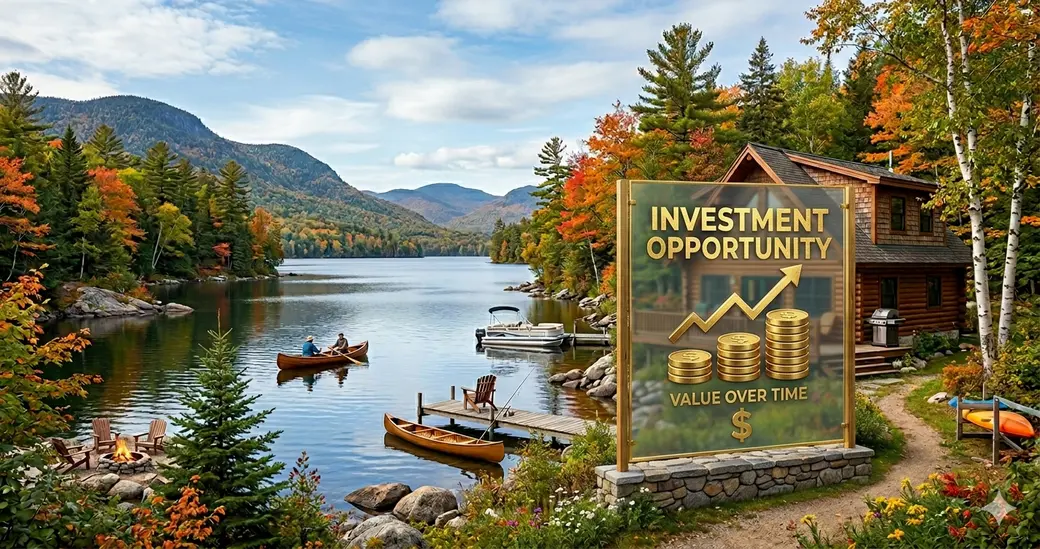
Is a Lake House a Good Investment? What Buyers in the Adirondacks Need to Know
Quick Answer: A lake house can be a strong investment in the Adirondack region, but only when you go in with clear eyes. Waterfront properties here hold value well, attract reliable rental demand, and offer genuine lifestyle upside. The catch is that carrying costs are higher than most buyers expect, and the regulatory landscape, from APA land-use rules to local short-term rental permits, adds complexity that can catch newcomers off guard.
The Lake House Dream Is Real, So Is the Math
Scroll through any real estate feed and it's clear: waterfront properties move people emotionally in a way that condos and subdivisions simply don't. There's something about waking up to a still lake, launching a kayak from your own dock, and watching the mist lift off the water that makes buyers willing to pay a premium, and sometimes overlook the fine print. But here's the thing: the buyers who actually feel great about their lake house five years later are the ones who ran the numbers first.
The Adirondacks have become one of the most closely watched waterfront markets in the Northeast. Remote-work flexibility, a renewed appetite for outdoor living, and finite supply of true lakefront land have all driven sustained demand. If you're weighing whether a lake house is a good investment, either as a primary residence, a second home, or an income-generating short-term rental, this guide walks you through the real investment calculus, not just the highlight reel.
The short answer is: yes, under the right conditions, a lake house in the Adirondacks can be an excellent long-term investment. But which lake, what type of access, and what your exit strategy looks like matter enormously. Let's unpack it.
Why Waterfront Properties Hold Their Value
The most fundamental driver of waterfront investment value is scarcity. You can build more condominiums. You cannot build more lakefront. In the Adirondack Park, where the Adirondack Park Agency (APA) tightly regulates development across roughly six million acres, that constraint is especially real. The APA's land classification system limits what can be built where, which means the supply of true waterfront parcels is not going to expand meaningfully. Constrained supply plus durable demand is a basic recipe for value retention.
Historically, vacation and waterfront properties have appreciated at rates comparable to, and often exceeding, the broader residential market during strong economic periods, while holding value better than other property types during downturns. According to the National Association of Realtors, second-home and vacation-property demand has remained structurally elevated since 2020, supported by demographic tailwinds as millennials and Gen X buyers enter peak earning years.
In the Adirondack market specifically, quality waterfront properties in communities like Lake Placid, Saranac Lake, Tupper Lake, and the Wilmington corridor regularly draw buyers from major metro areas, New York City, Boston, Montreal, who view the region as a long-term hedge against urban density. That out-of-market buyer pool provides a meaningful cushion against purely local economic cycles.
Investment Angles: How a Lake House Can Make Financial Sense
Appreciation Over Time
Adirondack waterfront listings that would have sold for $400,000 a decade ago are frequently trading well above $600,000 today, and prime lake frontage on recognized bodies of water commands significantly more. If you're buying a quality property with genuine water access in a recognized community and holding for seven to ten years, appreciation alone has historically rewarded that patience. That said, no market appreciates in a straight line, and past performance is not a guarantee of future returns.
Short-Term Rental Income Potential
Waterfront properties consistently rank among the highest-performing categories in the short-term rental market. Platforms like Airbnb and VRBO show strong summer occupancy and shoulder-season bookings for well-positioned Adirondack lake homes. Market intelligence from AirDNA, which tracks short-term rental performance data, consistently shows waterfront and mountain properties outperforming inland alternatives on both occupancy and average daily rate.
Important regulatory note: Before factoring STR income into your investment thesis, understand the rules where you're buying. North Elba (which includes Lake Placid) has a permit system for short-term rentals that includes caps and compliance requirements. Of note: Local ownership and a permit are required to have an STR in village limits. See Saranac Lake's short-term rental law for details on village-specific rules. Regulations vary significantly from one municipality to the next, confirming the rules in your target community before closing is non-negotiable.
Lifestyle Value and Personal Use
Not every investment is purely financial. A lake house that your family uses for three or four months a year while also appreciating in value is delivering a return that a brokerage account can't replicate. Many buyers in this market factor quality-of-life returns into their calculus, and that's entirely reasonable, as long as the underlying financials still hold up.
The Hidden Costs of Lake House Ownership
This is where many buyers get surprised. According to Bankrate, vacation homeowners routinely underestimate carrying costs by 20–30%. Here's where those costs tend to live in the Adirondack market:
Well and Septic Systems
Most lakefront properties outside village centers are on private well and septic rather than municipal water and sewer. Septic systems near water require periodic inspection and pumping, and older systems may need to be upgraded to meet current DEC standards, a project that can run $15,000 to $40,000 or more depending on site conditions. Budget for this proactively, and always get a septic inspection as part of due diligence.
Dock, Shoreline, and Watercraft Infrastructure
Owning waterfront means maintaining what's at the water's edge. Dock removal and reinstallation (required every season to avoid ice damage), shoreline erosion management, boat lifts, and seasonal winterization add up quickly. Expect to budget $2,000–$5,000 annually just for dock management, depending on your setup. Any modifications to the shoreline or dock structure will also likely require APA and DEC permits, another reason to work with an agent who understands Adirondack regulatory frameworks.
Four-Season Maintenance in a Mountain Climate
The Adirondacks are not a fair-weather market, and maintaining a lake home through hard winters is a real cost. Roof loads, frozen pipes, heating system reliability, and road access all need to be factored in, especially for properties used intermittently. If the property will sit empty for stretches of winter, remote monitoring systems and a local caretaker are often worth the cost.
Insurance Premiums
Waterfront properties typically carry higher homeowner's insurance premiums than comparable inland homes. If you plan to rent the property, you'll also need a short-term rental or vacation rental rider, standard homeowner policies typically exclude STR activity. Compare quotes from multiple carriers familiar with vacation properties before closing.
Property Taxes
Waterfront properties in desirable Adirondack communities are assessed at valuations that reflect their market position. Property taxes on a $700,000 lake home can run $8,000–$15,000+ annually depending on the municipality. Pull current tax records as part of your due diligence and confirm with the town assessor.
Market Trends Shaping Adirondack Waterfront in 2025–2026
Adirondack real estate has seen meaningful appreciation pressure over the past four years, driven by pandemic-era migration, remote work flexibility, and an influx of buyers from downstate New York and New England metro areas. According to Redfin's market data, competition for waterfront and vacation properties in rural upstate New York markets remains elevated compared to pre-2020 norms, with well-priced waterfront listings still moving quickly.
The 2026 FIS Alpine Ski World Cup at Whiteface Mountain and the return of major athletic events to Lake Placid's Olympic venues are drawing renewed attention to the region's infrastructure and visibility, factors that historically support property values in host communities. Buyers watching the Lake Placid investment landscape are increasingly treating this cycle as a long-term opportunity.
Inventory remains the dominant constraint. True waterfront listings, especially those with sandy beaches, deep water docks, or significant acreage, come to market infrequently and generate competitive offers when they do. According to data tracked by Freddie Mac, housing supply nationally has remained below equilibrium, a pattern that's especially pronounced in high-amenity, supply-constrained markets like the Adirondacks.
Smart Buying: Investment Advice Before You Make an Offer
1. Know What "Waterfront" Actually Means
In the Adirondacks, "waterfront" can mean a private sandy beach with a deep-water dock on a major boating lake, or it can mean a narrow strip of shoreline with a shared right-of-way on a small pond. The difference in value and usability is enormous. Always confirm: Is the water frontage deeded or a right-of-way? Is the lake motor-accessible? What are the depth and clarity conditions? Is the shoreline protected by DEC buffer requirements?
2. Confirm APA Classification Before You Plan Anything
The APA classifies land across the Park into categories that determine what you can build, expand, or modify. A resource management parcel may prohibit the additional structure you're planning. Understanding classification before you make an offer, not after, is critical. An experienced local real estate agent can help you pull this information and interpret what it means for your use case.
3. Research STR Rules in the Specific Municipality
If rental income is part of your investment model, do not assume STR is permitted everywhere. Rules vary significantly between unincorporated towns and villages, and they've been evolving rapidly. Consult current local regulations and connect with an agent who stays current on STR policy in the communities you're targeting.
4. Understand Seasonality and Real Carrying Costs
Model your holding costs conservatively. A useful framework: estimate 1–2% of purchase price annually for maintenance, plus fixed costs for taxes, insurance, and utilities. Run your cash flow at 60–70% of your optimistic STR revenue projection, not 100%. Tools like SmartAsset's home affordability calculator can help you stress-test different scenarios. If the investment pencils at conservative assumptions, it pencils.
5. Think About the Exit
The best investment buys are ones where someone else will want to buy from you someday. Before closing, ask yourself: Who is the buyer for this property in 10 years? Is the lake well-known and in demand? Is the access reliable? Is the structure in condition that won't scare off the next buyer's inspector? Per Investopedia's real estate investment framework, liquidity risk is one of the most overlooked factors in real estate, and more obscure waterfront parcels can take significantly longer to sell than prime lake properties.
Frequently Asked Questions
Is a lake house a good investment compared to a primary home?
It depends on your financial profile and goals. Lake houses typically cost more to carry than primary homes (higher insurance, maintenance, and property taxes), but they can also generate rental income and appreciate strongly in supply-constrained markets. The key is running the numbers honestly, not just on optimistic STR projections, and ensuring the property can carry itself even in slower seasons. Tina Leonard Real Estate can help you evaluate specific properties against realistic income and expense scenarios.
What are the risks of buying a lake house in the Adirondacks?
The primary risks are regulatory complexity (APA rules, STR permit requirements), higher-than-expected maintenance costs (especially well, septic, and dock infrastructure), and seasonality of rental income. Properties that are difficult to access in winter, or that don't comply with current septic standards, can also face costly remediation. Working with an agent who knows the Adirondack market, and not just general real estate, is one of the most effective ways to manage these risks.
What lakes near Saranac Lake and Lake Placid are best for investment?
Lakes with larger surface areas, motor-boat access, and established recreation reputations tend to command stronger values and STR performance. In the Saranac Lake area, the Saranac Lakes chain, Oseetah, and Flower lakes are well-regarded. Near Lake Placid, Mirror Lake and Lake Placid itself are the marquee options, though true frontage there is rare and priced accordingly. Explore current waterfront listings across the Adirondack region to see what's available and how properties are priced by lake.
Ready to Explore Adirondack Waterfront? Let's Talk.
Buying a lake house is one of the most meaningful real estate decisions you'll ever make, and in a market as nuanced as the Adirondacks, getting it right requires local expertise, not just a search filter. At Tina Leonard Real Estate, we work exclusively in the Adirondack region, and we've built our practice around helping buyers understand what they're actually getting into, the value, the costs, the regulatory landscape, and the long-term upside.
Whether you're exploring your first lakefront purchase, evaluating a property as an STR investment, or just trying to figure out which lakes and communities make sense for your goals, we're here to help you think it through, without the sales pitch.
Categories
Recent Posts








"My job is to find and attract mastery-based agents to the office, protect the culture, and make sure everyone is happy! "