A Local's Guide to Buying Your First Adirondack Cabin
A Local's Guide to Buying Your First Adirondack Cabin
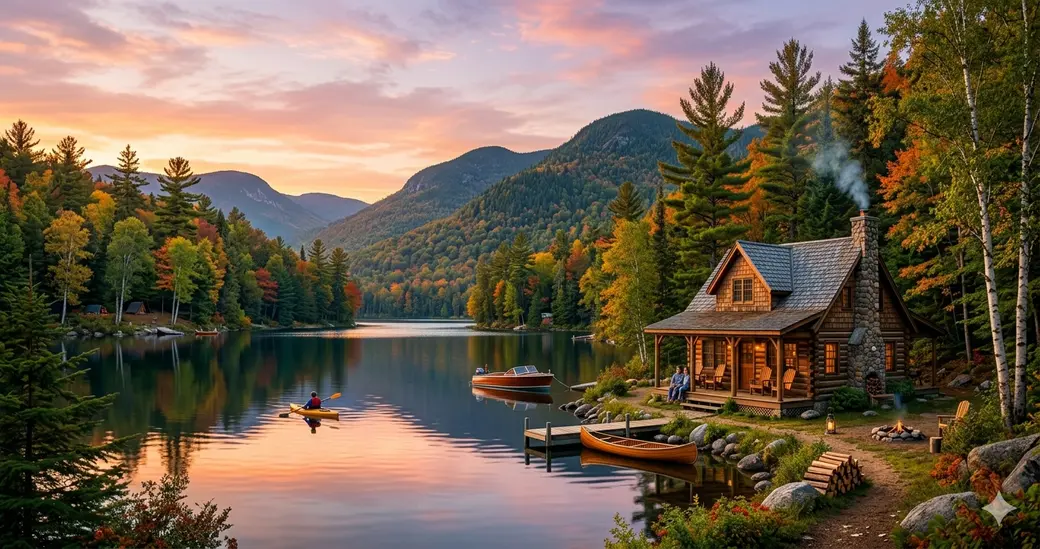
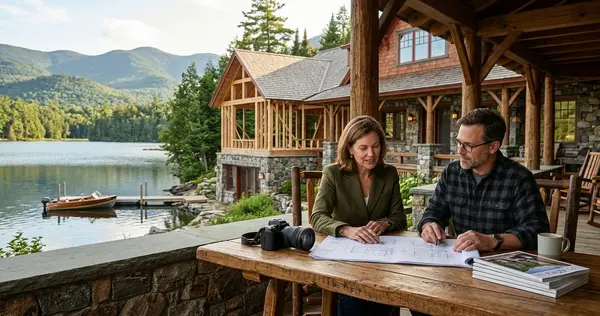
There's a moment every future cabin owner knows well. You're paddling across a still lake at dawn, or sitting by a fire while the loons call across the water, and the thought hits you: I want this to be mine. If you've felt that pull toward the Adirondacks, that six-million-acre patchwork of forest, peaks, and waterways in upstate New York, you're not alone. Cabin ownership here has surged in recent years, and for good reason. But buying a cabin in the Adirondack Park is unlike buying almost anywhere else in the country. The rules are different. The inspections are different. Even the way you think about "investment advice" has to shift.
This guide is written by someone who knows this region intimately, for buyers who want to do it right the first time. And when you're ready to take the next step, Tina Leonard Real Estate is here to guide you through every stage of the journey.
Why the Adirondacks Are a Unique Real Estate Market
Before diving into home buying tips specific to this region, it helps to understand what makes the Adirondack real estate market so distinct from a standard suburban purchase.
The Adirondack Park is the largest publicly protected area in the contiguous United States, larger than Yellowstone, Glacier, Everglades, and Grand Canyon National Parks combined. But here's the twist: roughly 50% of it is private land, and that's where cabins, camps, and lodges exist. This creates a layered regulatory environment that directly shapes what you can buy, what you can build, and how a property can be used.
The Adirondack Park Agency (APA) oversees land use across the park and classifies private land into categories ranging from Hamlet (the most development-friendly) to Resource Management (the most restrictive). Before falling in love with any listing, understanding which APA classification a parcel holds is one of the most critical early steps in your home buying journey.
Additionally, the New York State Department of Environmental Conservation (DEC) regulates everything from septic systems near water bodies to dock permits and shoreline clearing. For waterfront properties especially, these regulations significantly affect both current use and future renovation potential. The Adirondack Council, a leading nonprofit watchdog for the region, also publishes useful plain-language overviews of how conservation law affects private landowners.
Understanding this framework isn't a reason to hesitate, it's the foundation of smart buying in this market. To start exploring what's available right now, browse current Adirondack listings on tinaleonardrealestate.com.
Current Market Trends: What Buyers Need to Know
If you've been watching Adirondack real estate over the past several years, you've witnessed a significant shift. The pandemic-era migration away from urban centers drove demand for rural and recreational properties to historic highs, and while some heat has come out of the market, the fundamentals remain strong.
Here's what current market trends reveal for buyers today:
Inventory remains constrained. Quality waterfront camps and cabins in high-demand communities like Lake Placid, Saranac Lake, Old Forge, and Inlet continue to sell quickly and with limited negotiating room. Properties in the $300,000–$600,000 range see the most competition, particularly those with deeded water access or actual lakefront. For the latest national data on recreational and second-home demand, the National Association of Realtors (NAR) Research & Statistics portal provides useful context alongside local data.
Off-water properties are a value play. If waterfront prices are out of reach, mountain-view or stream-adjacent properties in communities like Keene, Wilmington, or the Lake George region offer compelling alternatives. These properties have appreciated meaningfully but still trade at a significant discount to direct waterfront.
Short-term rental demand is reshaping investment math. Platforms like Airbnb and VRBO have made cabin rentals in the Adirondacks a legitimate income stream for owners. However, local municipalities are increasingly regulating short-term rentals, so any investment advice that treats rental income as guaranteed deserves scrutiny. Always verify current local ordinances before factoring rental projections into your purchase decision. The Adirondacks official tourism resource at visitadirondacks.com offers community-by-community overviews that can help you gauge visitor demand by area.
Seasonal pricing patterns still exist. Spring and late fall tend to bring slightly less competition, though the days of dramatically discounted off-season deals are largely behind us. Sellers here are increasingly sophisticated about their property's value. Resources like Realtor.com's market trends tool can help you benchmark list-price-to-sale-price ratios in specific zip codes before you make an offer.
Home Buying Tips: The Adirondack-Specific Checklist
General home buying advice, get pre-approved, hire an inspector, read the disclosures, applies here, of course. But there are layers of due diligence that are specific to this region and that can make or break your purchase.
1. Understand What You're Actually Buying
Adirondack properties can include a bewildering range of rights and encumbrances. Ask about:
- Deeded lake access vs. lakefront ownership: These are not the same. Deeded access may mean you share a right-of-way to a beach with dozens of other property owners.
- Easements: Utility, timber, or access easements can significantly restrict what you do with the land.
- Mineral rights: Less commonly an issue in this region but worth confirming.
- APA jurisdiction and classification: As noted above, this determines what alterations and additions are even permissible.
Tina Leonard's team specializes in parsing exactly these details for buyers. Get in touch for a no-obligation consultation before you start seriously touring properties.
2. Hire an Inspector Who Knows Cabins
A general home inspector who primarily works in suburban housing markets may not be the right fit for a 1970s log cabin on a dirt road. Seek inspectors with specific experience in:
- Well and water quality testing (coliform bacteria, arsenic, and radon are relevant concerns in this geology)
- Septic system assessment, especially proximity to water bodies, age of the system, and soil perc capacity
- Structural integrity of log or post-and-beam construction
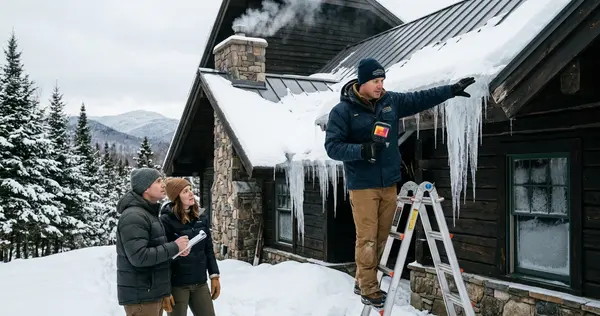
- Roof condition, particularly for cabins with metal roofs under heavy snow loads
- Heating systems: Many cabins rely on propane, oil, or wood; inspect all of them
The American Society of Home Inspectors (ASHI) maintains a searchable database of certified inspectors. Your real estate agent should also be able to refer you to inspectors who regularly work on seasonal properties in the Adirondack region specifically.
3. Know Your Septic Situation
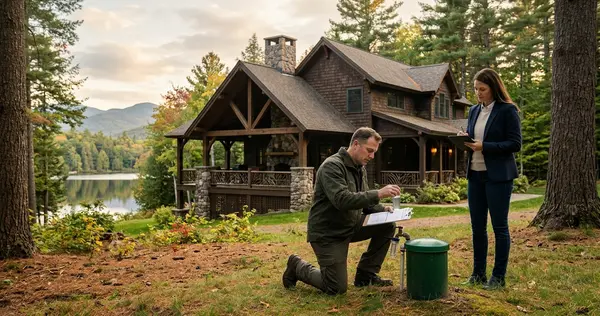
This deserves its own section. Septic systems in the Adirondacks are governed by both the APA and local health departments. Many older camps predate modern septic standards. A failed or non-compliant system can cost $15,000–$50,000 or more to replace, or may not be replaceable at all given current setback requirements from water bodies.
Before closing on any Adirondack property, obtain a full septic inspection including a dye test or camera inspection of the system, and verify its current permit status with the county health department. The DEC's water resources guidance outlines the setback and treatment standards that apply to properties near lakes and streams.
4. Factor in Year-Round vs. Seasonal Access
Not all Adirondack cabins are accessible in winter. Some dirt roads are not maintained by the town after the first snowfall. Some properties are on private roads with no formal maintenance agreement. If you envision winter snowshoeing and holiday retreats, confirm that your property has reliable year-round road access, and that the driveway itself is manageable in four-season conditions. The Adirondack.net community guide provides helpful regional context on which areas are most active in each season.
5. Budget for True Ownership Costs
One of the most important home buying tips for first-time cabin owners is to understand that the purchase price is just the beginning. Annual ownership costs in the Adirondacks typically include:
- Property taxes: Highly variable by municipality; Essex County, Hamilton County, and Warren County have different tax structures. Use the New York State Department of Taxation and Finance property tax lookup to research assessed values and rates before you buy.
- Propane or heating oil: For seasonal use, budget carefully based on insulation quality
- Well and septic maintenance: Annual pump-out for septic, periodic water testing for the well
- Dock and waterfront maintenance (if applicable): Permits, float replacement, winterization
- Road or association fees: Some communities have private road maintenance agreements
- Caretaking: Many owners hire local caretakers to check on properties, handle minor repairs, and manage spring opening and fall closing
Financing Your Adirondack Cabin: What's Different
Financing a second home or recreational property comes with nuances that first-time cabin buyers often don't anticipate.
Conventional vs. second-home loans. If the cabin will be used personally, not primarily as a rental, and is not your primary residence, it will typically be classified as a second home. Investopedia's overview of second-home mortgages is a useful primer on how lenders categorize and underwrite these purchases. Second-home mortgage rates run slightly higher than primary residence rates but are generally better than investment property rates. You'll typically need a minimum 10–20% down payment.
Comparing current rates. Before locking in a lender, Bankrate's second-home mortgage rate tracker lets you compare current offers side-by-side, a useful benchmark before you walk into any lending conversation.
Seasonal-use properties. Some lenders add restrictions or overlays for properties that lack year-round utilities or road access. If your target cabin is truly seasonal, discuss this explicitly with lenders before assuming standard financing applies.
Cash purchases. The Adirondack market includes a meaningful percentage of cash transactions, particularly in the $500,000+ segment. If you're competing against cash buyers, a strong pre-approval letter and flexible closing timeline can help level the playing field.
USDA Rural Development loans. Parts of the Adirondack region qualify for USDA programs, which can offer favorable financing for primary-residence buyers. Check eligibility through the USDA Rural Development portal.
HUD resources for first-time buyers. If this is your first real estate purchase of any kind, the U.S. Department of Housing and Urban Development (HUD) offers free housing counseling resources and first-time buyer education that can be valuable regardless of property type.
For additional mortgage guidance, the Consumer Financial Protection Bureau's mortgage resource center provides reliable, unbiased information on loan types, closing costs, and your rights as a borrower.
Investment Advice: Is an Adirondack Cabin a Smart Buy?
Let's address this directly, because it's one of the most common questions from buyers considering a cabin purchase with one eye on financial return.
The Adirondack market has historically been resilient. The combination of limited supply (the Park's "forever wild" designation prevents conversion of new land to private use) and sustained demand from the NYC metro area, Albany, and increasingly remote workers creates favorable long-term supply-demand dynamics. Properties that were purchased for $180,000 fifteen years ago are commonly worth $400,000–$700,000 today, depending on location and improvements.
However, responsible investment advice requires acknowledging the risks too:
- Recreational markets are sensitive to economic cycles. In recessions, cabin values tend to fall faster and recover more slowly than primary housing markets.
- Maintenance costs can erode returns. A neglected cabin can deteriorate quickly in the Adirondack climate. Budget for ongoing maintenance or your investment value will suffer.
- Short-term rental regulations are evolving. Several Adirondack municipalities have passed or are actively considering STR permit requirements, caps, and in some cases restrictions on non-owner-occupied rentals. This could significantly affect projected rental income.
- Capital improvements may not generate dollar-for-dollar return. Unlike primary markets, the niche nature of cabin real estate means that some improvements, like high-end kitchen renovations, may not translate to proportional value increases.
The smartest investment framing for an Adirondack cabin is usually this: buy something you would genuinely love owning and using even if it never rented a single week and appreciated modestly. The financial upside is real, but the quality of life benefit is what makes this purchase worthwhile for most buyers.
Want a candid, data-driven conversation about value and appreciation in specific Adirondack communities? The team at Tina Leonard Real Estate is happy to talk through the numbers without pressure or sales spin.
Choosing the Right Community for You
The Adirondack Park spans 12 counties and dozens of distinct communities, each with its own character. A few highlights to help orient first-time buyers, and for a deeper dive into what life looks like in each area, visitadirondacks.com is an excellent starting point:
Lake Placid & Saranac Lake (Northern Adirondacks): The most recognized Adirondack destinations. Excellent infrastructure, strong year-round appeal, strong cultural amenities, and among the highest price points. Waterfront properties here are scarce and command a significant premium.
Old Forge & Inlet (Western Adirondacks): Known for the Fulton Chain of Lakes and a more family-oriented camp culture. Generally more accessible price points, strong summer rental demand, snowmobiling culture in winter. A strong value play for buyers seeking waterfront access.
Keene Valley & Lake Placid Surroundings: A haven for hikers and High Peaks enthusiasts. Properties here skew toward mountain-view rather than lakefront, with a more private, less touristy character.
Lake George Region (Southern Adirondacks / Warren County): The southern gateway to the park, with excellent infrastructure and proximity to Albany and the I-87 corridor. More year-round accessible than many areas. Popular with buyers who want a shorter drive from the metro area.
Tupper Lake & Long Lake (Central Adirondacks): Less discovered by broader markets, these communities offer some of the most authentic Adirondack character and the best remaining value for waterfront properties.
Explore active listings by community on tinaleonardrealestate.com to get a real-time sense of what your budget achieves in each area.
Working With a Local Real Estate Professional
Navigating the Adirondack market, with its APA regulations, seasonal access issues, financing nuances, and hyperlocal community dynamics, is genuinely complex. A local real estate professional who specializes in this region is not a luxury; it's a necessity.
Look for an agent who:
- Has closed multiple transactions in the specific communities you're targeting
- Understands APA land classifications and can explain how they affect any listing you're considering
- Has relationships with local inspectors, surveyors, and attorneys who specialize in rural transactions
- Is honest about the limitations of rental income projections
- Listens to what you want out of ownership, not just the purchase price ceiling
The New York State Association of Realtors (NYSAR) can help you verify an agent's license and credentials. And if you'd like to learn more about Tina Leonard's background and track record in the Adirondack market specifically, visit the About page at tinaleonardrealestate.com.
The Closing Process: What to Expect
Closing on an Adirondack cabin typically takes 45–75 days from accepted offer, somewhat longer than urban transactions due to the inspections, permits, and rural financing considerations involved. Key milestones to plan for:
- Offer and acceptance: Often followed by a brief inspection period
- Attorney review: New York is an attorney-state for real estate; both buyer and seller retain separate counsel
- Inspection contingencies: Budget 7–14 days for comprehensive rural inspections
- Title search: Particularly important for properties with complex easements or boundary histories
- Mortgage commitment: If financing, lenders will require an appraisal; rural appraisals can be challenging if comparables are limited
Have your attorney specifically review any APA permits associated with the property, including dock permits, septic approvals, and any variance history, before waiving contingencies. The APA's official permit information page is a useful reference for understanding what documentation should accompany any sale.
Ready to Make Your Adirondack Dream a Reality?
Buying your first Adirondack cabin is one of the most rewarding decisions you can make, not just as a real estate investment, but as a commitment to a way of life. The research matters. The due diligence matters. And having the right team of local experts in your corner makes all the difference between a transaction that turns into a legacy property and one that becomes a cautionary tale.
Whether you're just beginning to explore your options or ready to move quickly on the right property, Tina Leonard Real Estate is here to help at every step.
Here's how to get started:
- Browse current Adirondack cabin listings, filter by community, price, and waterfront access
- Schedule a personalized consultation with Tina's team, no obligation, just an honest conversation about what's possible and how to get there
The loons are calling. Let's help you answer.
Disclaimer: This blog post is intended for informational purposes only and does not constitute legal, financial, or professional real estate advice. Market data referenced reflects general trends as of the date of publication. All third-party links were verified as active at time of publication. Readers are encouraged to consult licensed real estate professionals, attorneys, and financial advisors before making any purchase decision.
Categories
Recent Posts


OUR MISSION
We're proud to be part of the following global networks of distinguished brokerage companies: